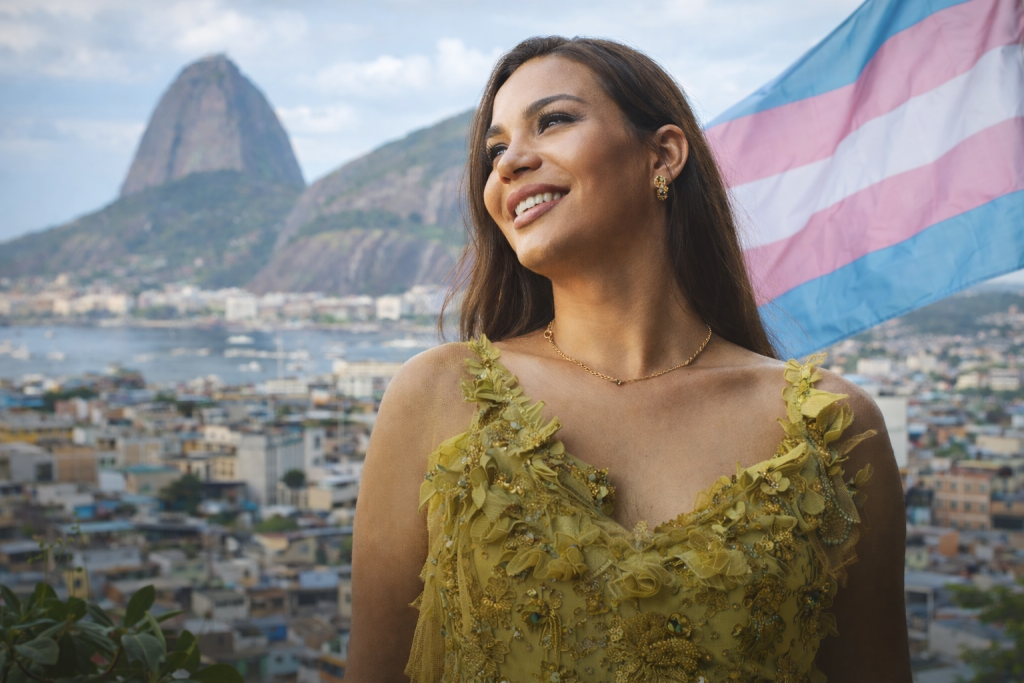

Hello, friends! Today we’re exploring an important topic that connects culture, identity, and human rights: the lives and experiences of trans people in Brazil.
Every year on International Transgender Day of Visibility (March 31), people around the world celebrate the lives, achievements, and contributions of transgender individuals. It’s a day dedicated to recognition, respect, and understanding, and it also invites us to learn more about the realities faced by trans communities in different countries.
Brazil is known for its vibrant LGBTQIA+ culture, powerful activism, and internationally recognized trans artists, models, and public figures. At the same time, discussions about transgender rights, safety, and social acceptance in Brazil remain extremely important.
In this Dica, we’ll explore the history, visibility, and experiences of transgender communities in Brazil, while also introducing some useful Portuguese expressions that can help you navigate conversations about identity and diversity.
Contents
Trans Life, Visibility, and Travel in Brazil
Brazil is famous for many things: vibrant culture, expressive people, and a society that often celebrates individuality. From the colorful energy of Carnival to the powerful voices in music, art, and fashion, self-expression is part of daily life.
For many transgender people in Brazil, life is a mix of celebration and challenge. On one hand, the country has produced globally recognized trans artists, activists, and models who proudly represent their identities in public spaces. On the other hand, transgender individuals still face serious social and safety issues that continue to shape conversations about rights, protection, and equality.
Understanding Gender Identity in Brazil 🏳️⚧️
To understand trans experiences in Brazil, it helps to start with a few basic terms. Like in many countries, the experiences of the trans community in Brazil are diverse and personal, and language plays a big role in how people describe themselves.
Let’s start with a few simple terms that help explain the conversation:
Transgender refers to someone whose gender identity is different from the sex they were assigned at birth. For example, a person who was assigned male at birth but identifies and lives as a woman may describe herself as a transgender woman.
Cisgender is the opposite term. It describes someone whose gender identity matches the sex they were assigned at birth.
Non-binary is used by people whose gender identity does not fit strictly into the categories of male or female. Some non-binary individuals may identify somewhere in between, while others may not identify with either category.
Gender identity simply means a person’s internal sense of who they are in terms of gender. It’s about how someone understands themselves, not how others label them.
In Brazil, as in many places, these terms exist alongside local cultural expressions and personal choices. Some people prefer international terminology like transgender, while others may use Portuguese words such as pessoa trans, mulher trans, or homem trans. The most important thing to remember is that people choose the words that best describe their own identity.

Because of this, it’s always best to avoid assumptions. Gender identity is personal, and respectful conversations usually start with listening rather than labeling. Here’s an important detail: in Brazil, language around gender identity is not just about translation. It’s also about culture, history, and respect.
For example, one very important expression in Brazilian Portuguese is nome social. This is the name a trans person uses in daily life, even if older documents still show a different name. So if you hear someone say:
Meu nome social é Laura.
“My social name is Laura.”
That is not a nickname. It is part of how the person wants to be recognized and respected.
Neutral Pronouns in Portuguese
The most common and widely accepted pronouns in Brazil’s LGBT+ community vary according to each person’s gender identity, ranging from traditional pronouns to neutral ones used in inclusive language. Here are the most common and accepted ones:
1. Binary Pronouns (Most Common)
Ela/Dela  : Used by cisgender women and trans women.
Ele/Dele : Used by cisgender men and trans men.
2. Neutral Pronouns (Inclusive)
These are used mainly by non-binary people, gender-fluid people, or people who do not identify exclusively as male or female.
Elu/Delu : The most accepted and common neutral system in Brazil. It replaces ele/ela with elu and dele/dela with delu.
Elx/Delx
: Also used in writing, although the pronunciation is more difficult.
Ile/Dile : Another common variation of neutral pronouns.
3. Neutral Language Terms
Todes : Used to refer to a group in an inclusive way, replacing todos or todas.
Amigue, Bonite : These replace the ending -o/-a with -e to create neutral words.
Transgender people may use binary pronouns (ele/ela) or neutral pronouns, depending on what feels most comfortable to them. And if you’re not sure how to speak respectfully, the best idea is simple: listen first and follow the person’s own language.
Here are a few useful expressions:
Quais pronomes você usa?
“Which pronouns do you use?”
Como você prefere que te chame?
“How do you prefer to be addressed?”
Desculpa, vou corrigir.
“Sorry, I’ll correct that.”
That last one matters a lot. In Brazil, as in many places, respect is often less about being perfect on the first try and more about showing that you are willing to listen and adjust.
At Rio & Learn, our Group Portuguese Classes help students build that confidence in real conversations. By learning with teachers and classmates from different backgrounds, students practice useful everyday language while also gaining a deeper understanding of Brazilian culture and social topics.
Practical Etiquette for Visitors
Be curious, but respectful. Learning about gender diversity is positive, but remember that strangers are not required to explain their identity.
Respect privacy. Questions about someone’s body, medical history, or past identity are considered very personal in most cultures.
Avoid assumptions. If you’re unsure how someone identifies, it’s often best to use the person’s name and follow the terms they use for themselves instead of guessing gendered language.
Focus on the person, not just the identity. Transgender people, like everyone else, are students, artists, professionals, friends, and travelers — their identity is only one part of their story.
A Short History of Visibility, Resistance, and Community
The history of trans visibility in Brazil is not only about being seen — it is also about resistance, survival, and collective organization. One of the earliest figures often mentioned in this history is Xica Manicongo, a person brought from Congo to colonial Brazil in the 16th century. Historical records linked to the Portuguese Inquisition describe Xica as living in ways that challenged the gender rules imposed at the time. Today, many scholars and activists remember her as an early symbol of trans memory and resistance in Brazil.

In the late 20th century, trans and travesti communities in Brazil began building stronger forms of collective activism. Part of that history is connected to the response to the HIV/AIDS crisis, which pushed many marginalized communities to organize, demand healthcare access, and fight for public recognition. Researchers studying the movement note that these early organizations helped lay the groundwork for later struggles over citizenship, healthcare, and legal rights.
A major milestone came with the growth of national organizing. ANTRA — the National Association of Travestis and Transsexuals — emerged from this broader movement in the 1990s and became one of the country’s most important trans advocacy organizations. Its work has included political mobilization, public campaigns, and documenting violence against trans people across Brazil. Brazil also established a National Day of Trans Visibility in 2004, years before the international day became widely recognized, showing that trans activism in the country has long pushed for public visibility as well as rights.
This history also includes painful reminders of why activism remains necessary. Cases of anti-trans violence, such as the murder of in 2017, drew national and international attention to the dangers many trans Brazilians still face. At the same time, growing activism, public debate, and cultural recognition have helped bring trans lives and voices more clearly into Brazilian society. Understanding this history helps us see trans life in Brazil not as a recent trend, but as part of a longer story of struggle, community, and resilience.
Laws and Rights for Trans People in Brazil
Conversations about transgender rights in Brazil often focus on the important legal progress the country has made in recent years. Brazilian courts and institutions have introduced measures that recognize gender identity and help transgender people access documents, services, and legal protection.
One of the most significant milestones happened in 2018, when Brazil’s Supreme Federal Court allowed transgender people to change their legal name and gender marker on official documents through self-declaration. This means that individuals no longer need surgery, medical reports, or court authorization to update documents like birth certificates or identification cards.
In practical terms, this change allows transgender people to align their official documents with their gender identity, which can make everyday tasks much easier — from opening bank accounts to applying for jobs or traveling.
Brazil also has a legal framework that protects LGBTQIA+ people from discrimination. In 2019, the Supreme Federal Court ruled that homophobia and transphobia should be treated under the country’s anti-racism law, which provides legal penalties for discrimination and hate crimes.
Also in 2019, the Superior Court of Justice (STJ) confirmed that the Maria da Penha Law applies to transgender women in situations of domestic violence.
However, like in many countries, laws and daily experiences are not always the same thing. Enforcement of protections can vary depending on region, local institutions, and social attitudes. While many cities — especially large urban centers — have growing awareness and support networks, challenges and discrimination can still occur.
What Travelers and Newcomers Should Know
For transgender travelers or newcomers visiting Brazil, understanding how documents are used in everyday situations can be helpful.
Identification is sometimes required for things like hotel check-ins, domestic flights, or certain event entries. In most cases, staff simply compare the name on the booking with the identification provided.
If a person’s documents do not match their current name or gender presentation, the best approach is usually calm and respectful communication. Brazilian service staff are generally used to dealing with international travelers, and situations are often resolved quickly with polite explanations.
Large cities such as Rio de Janeiro and São Paulo tend to have more visible LGBTQIA+ communities and support networks, while smaller regions may have different social dynamics. Understanding the legal framework — and the social realities around it — helps visitors navigate Brazil with more awareness and confidence.

Healthcare Access and Support Networks
Access to healthcare is an important part of the conversation around transgender life in Brazil. The country’s public healthcare system, SUS (Sistema Único de Saúde), includes pathways for transgender care through what is often called the Processo Transexualizador. Depending on the service and location, this can include psychological support, hormone-related care, outpatient follow-up, and, in some accredited centers, gender-affirming surgeries.
In practice, however, access is uneven. Specialized services are concentrated in a limited number of hospitals and outpatient centers, which means waiting times, distance, and local availability can all affect care. Respectful treatment also matters. In Brazil, the use of a person’s nome social is an important part of dignity and safer everyday interactions in medical settings.
Because access can vary so much, many trans people in Brazil also rely on community networks and local organizations for support. LGBTQIA+ groups and advocacy organizations often help people find trusted clinics, understand referral paths, and connect with legal or emotional support.
For Travelers and Short-Term Visitors
For travelers and short-term visitors, planning ahead can make a big difference. Travel insurance is highly recommended, especially insurance that covers international medical care. It is also helpful to keep emergency contacts and important medical information accessible during your trip. If you need medical services while traveling, larger cities usually offer more options, and it is worth looking for clinics or professionals known for inclusive and respectful care.
Another helpful tool while traveling is language. Even basic Portuguese can make medical situations easier to navigate, helping you explain what you need, ask questions clearly, and better understand what a doctor or healthcare professional is telling you. That is one reason immersive learning can be so valuable. Through our Immersion Courses, students experience Portuguese in real situations across Rio and build confidence for more natural everyday interactions.

Over the past few decades, trans visibility in Brazil has grown in media, music, fashion, and politics. That visibility matters because it helps move public conversation beyond stereotypes and shows transgender people as artists, leaders, and public voices.
In music, artists such as Liniker have helped expand trans representation in mainstream Brazilian culture. Liniker has become one of the country’s most recognized contemporary singers and has also received major international recognition through the Latin Grammys. In politics, figures such as Erika Hilton and Duda Salabert have become important symbols of visibility and institutional change, helping bring transgender representation into Brazil’s national legislature. Erika Hilton’s official biography describes her as the first Black trans woman elected to Brazil’s Chamber of Deputies, while Duda Salabert is also a federal deputy and the founder of the NGO Transvest, which supports travestis and trans people in Belo Horizonte.
These examples show that trans visibility in Brazil is not limited to entertainment. It is also present in public debate, lawmaking, education, and activism. For many Brazilians, seeing trans public figures in respected professional spaces helps challenge older ideas about gender and belonging. At the same time, representation is not the same as equality. Public visibility can open doors, but it does not automatically remove discrimination, violence, or economic inequality. That is why many activists continue to stress the need for respectful, realistic representation alongside legal and social change.
Beauty pageants and modeling have also played a role in trans visibility. Before broader representation existed in mainstream media, pageants were often one of the few public spaces where trans women could gain recognition and community visibility. Today, events such as Miss Universe Trans Brasil still present themselves as platforms for representation and visibility, while winners such as Brazil’s Natasha Cardoso, who won Miss Trans Global in 2022, have brought additional international attention to Brazilian trans representation.
When discussing media and public figures, the most important point is to focus on voice, work, and impact. Trans visibility in Brazil is growing not only because people are being seen, but because they are shaping culture, public life, and national conversations in more visible ways than before.
Safety and Reality Check for Trans Travelers and Allies
It is important to speak honestly about safety. Brazil has long recorded extremely high levels of lethal violence against trans people. According to the latest report from the National Association of Transvestites and Transgender People (ANTRA), 80 transgender people were murdered in Brazil in 2025, compared with 122 in 2024. Despite the decrease, Brazil has held the highest number of recorded killings of trans people globally for almost two decades.
Research also shows that most victims are young trans women between 18 and 35 years old, often Black and economically vulnerable. These statistics reflect broader social inequalities, including discrimination, poverty, and limited access to education and employment.
At the same time, Brazil is a vast and socially diverse country. Major cities such as Rio de Janeiro, São Paulo, and other urban centers have visible LGBTQIA+ communities, Pride events, nightlife scenes, and social spaces that are accustomed to diversity.
The goal of this section is not to create fear, but to present the reality with transparency so travelers can approach their trip with awareness, respect for local contexts, and informed decision-making.
Practical Tips for Traveling Safely
A few simple habits can help make travel smoother and more comfortable:
Choose well-reviewed accommodations. Staying in central neighborhoods with good transport options and regular foot traffic can help you feel more secure.
Use trusted transportation at night. Ride apps or official taxis are usually safer than walking through unfamiliar or isolated areas late at night.
Look for LGBTQIA+ friendly venues. Many bars, cultural spaces, and events openly welcome diverse communities. Local recommendations can help you find welcoming environments.
Stay aware of your surroundings. Just like in any large city, paying attention to your environment can help you avoid uncomfortable situations.
Trust your instincts. If a place or situation feels unsafe, it’s always okay to leave and move to a more comfortable space.
Why Does Brazil Seem So Visible for Trans People?
A common stereotype about Brazil is that trans people seem unusually visible in public life. This perception usually says more about visibility, media attention, and public culture than about numbers alone.
One factor is Brazil’s strong public culture. Music, nightlife, street festivals, and events like Carnival create spaces where identity and self-expression are part of everyday life.
Another factor is media attention. Brazil frequently appears in international reporting about LGBTQIA+ topics — both for moments of progress and for discussions about social challenges.
Social and economic inequality can also shape how people appear in public life. In many places around the world, discrimination can limit access to traditional employment opportunities for transgender people.
All of these factors combine to create a situation where visibility does not necessarily equal population size — it often reflects culture, media attention, and social dynamics.
For readers and travelers, the most meaningful takeaway is simple: instead of focusing on statistics or stereotypes, it’s better to focus on respect, curiosity, and support.
Portuguese Practice: Common Expression in Context — “Com licença”
When traveling in Brazil, small expressions of politeness can make a big difference. One of the most useful phrases you’ll hear every day is “Com licença”, which means “Excuse me”.
Here are a few examples you might hear or use while traveling:
Com licença, você pode me ajudar?
Excuse me, can you help me?
Com licença, onde fica o banheiro?
Excuse me, where is the bathroom?
Com licença, este lugar está ocupado?
Excuse me, is this seat taken?
Com licença, posso fazer uma pergunta?
Excuse me, may I ask a question?
This last example is especially useful when approaching someone politely without making assumptions. It allows you to start a conversation in a respectful way before asking what you need.
And the best part? Learning just a few phrases can reduce awkward moments, show respect, and open warmer conversations during your time in Brazil.
Travel with Care, Leave Room for Joy
Brazil is a country known for its energy, creativity, and warmth. Music fills the streets, people gather to celebrate life, and everyday moments often turn into shared experiences. Within this vibrant culture, respect and kindness play an important role in how people connect with one another.
Understanding topics like gender identity, community, and diversity helps travelers see Brazil in a deeper way. It reminds us that every culture is made up of many voices, stories, and experiences. When visitors approach these conversations with curiosity and care, they help create more meaningful connections along the way.
If you want to explore Brazil more thoughtfully, keep learning, keep listening, and keep asking respectful questions. Learning Portuguese is one of the best ways to do that. Language helps you understand conversations, communicate clearly, and interact with people in a more natural and friendly way.
Traveling with respect leaves space for those moments of connection — and that’s where the real joy of Brazil often begins.
Click on the links below to see more related Dicas:
Gay Rio
Rio Carnival
Social Issues in Brazil
Parade in Rio de Janeiro Carnival
Racism in Brazil

Jonathan is a Portuguese teacher from Rio de Janeiro who believes learning a language should be as thrilling as an epic quest. With a background in theater and dance, he brings storytelling and movement into the classroom, making every lesson a cultural immersion. When he’s not leading RioLIVE! experiences or teaching online, you’ll find him exploring RPGs, anime, and Brazilian mysticism. Join Jonathan to discover a relaxed, creative, and uniquely “Carioca” way to master Portuguese.
PakarPBN
A Private Blog Network (PBN) is a collection of websites that are controlled by a single individual or organization and used primarily to build backlinks to a “money site” in order to influence its ranking in search engines such as Google. The core idea behind a PBN is based on the importance of backlinks in Google’s ranking algorithm. Since Google views backlinks as signals of authority and trust, some website owners attempt to artificially create these signals through a controlled network of sites.
In a typical PBN setup, the owner acquires expired or aged domains that already have existing authority, backlinks, and history. These domains are rebuilt with new content and hosted separately, often using different IP addresses, hosting providers, themes, and ownership details to make them appear unrelated. Within the content published on these sites, links are strategically placed that point to the main website the owner wants to rank higher. By doing this, the owner attempts to pass link equity (also known as “link juice”) from the PBN sites to the target website.
The purpose of a PBN is to give the impression that the target website is naturally earning links from multiple independent sources. If done effectively, this can temporarily improve keyword rankings, increase organic visibility, and drive more traffic from search results.