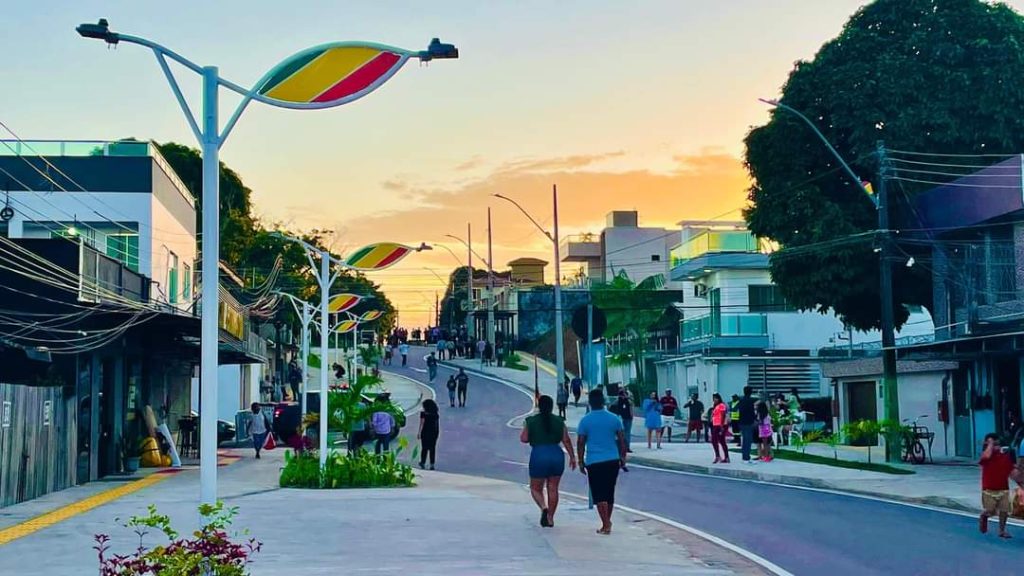

Did you know there’s a city in Brazil that sits directly on the Equator? Welcome to Macapá, the capital of the state of Amapá, a city uniquely positioned in the Amazon Delta where the Amazon River meets the Atlantic Ocean. While it may not top most travelers’ bucket lists, Macapá boasts a charm and history all its own. And today, February 4th, marks the anniversary of this northern Brazilian city! Let’s explore Macapá’s map, weather, population, landmarks, and top attractions.
Macapá is one of the most unique cities in Brazil — and in the world.
It is the only Brazilian capital located exactly on the Equator, right in the middle of the planet, where the Northern and Southern Hemispheres meet. Beyond this geographic curiosity, Macapá is also famous for its isolation, its strong Amazonian identity, and the feeling of being far from everything — in the best possible way.
Where Is Macapá?
Macapá is located in the northernmost part of Brazil, in the state of Amapá, right on the Amazon Delta, where the Amazon river meets the Atlantic Ocean. It’s the only state capital in Brazil that cannot be reached by road from other capitals – talk about remote! Instead, you’ll need to fly or take a boat.
Macapá Map
Let’s see properly in a map where Macapá is located on a map:
Key Facts About Macapá:
- Location: Latitude 0° – it’s literally bisected by the Equator.
- Macapá Population: Approximately 520,000 residents.
- Transportation: Accessed via Macapá International Airport (MCP) and waterways.
Pro Tip: Practice your Portuguese skills while exploring a map of Brazil with our Rio & Learn fun classes!
Macapá and the Equator: A City in the Middle of the World
Macapá is one of the rare capitals in the world located exactly on the Equator line. This isn’t just a fun fact — it shapes the city’s identity, tourism, and even how people talk about where they live.
At the Marco Zero monument, you can cross hemispheres in seconds, take iconic photos, and experience a place where geography becomes something tangible. Unlike most destinations where the Equator is just a line on a map, in Macapá it’s part of everyday life.
This is also a great moment for Portuguese learners to hear locals say things like:
Português English Aqui é a linha do Equador. Here is the Equator line. Macapá fica bem no meio do mundo. Macapá is right in the middle of the world.
Learning Portuguese through places like this makes geography, culture, and language connect naturally — exactly what we do in our Group Classes, where real Brazil is part of the lesson.
A Brief History of Macapá
Founded in 1758, Macapá started as a Portuguese military outpost to protect Brazil’s northern borders. Its location on the Equator was both a blessing and a challenge, shaping its identity over centuries. The city’s strategic position gave birth to its most famous landmark, the Fortress of São José de Macapá. Built in the 18th century, this fortress is an enduring symbol of colonial resilience and architecture.
Don’t Miss:
- Guided tours of the Fortress of São José.
- Views of the Amazon River from its walls.
Macapá’s Weather: Hot and Humid
If you’re planning to visit, prepare for equatorial weather:
- Temperature: Averages between 24°C (75°F) and 32°C (89°F).
- Seasons: Rainy (December to June) and dry (July to November).
Monthly Macapá Temperature Table:
| Month | Avg High (°C) | Avg Low (°C) | Avg High (°F) | Avg Low (°F) |
|---|---|---|---|---|
| January | 30.9 | 23.6 | 87.6 | 74.5 |
| February | 30.2 | 23.5 | 86.4 | 74.3 |
| March | 30.4 | 23.7 | 86.7 | 74.7 |
| April | 30.7 | 24.0 | 87.3 | 75.2 |
| May | 31.3 | 24.2 | 88.3 | 75.6 |
| June | 31.8 | 24.0 | 89.2 | 75.2 |
| July | 32.1 | 23.9 | 89.8 | 75.0 |
| August | 32.8 | 24.3 | 91.0 | 75.7 |
| September | 33.4 | 24.3 | 92.1 | 75.7 |
| October | 33.8 | 24.4 | 92.8 | 75.9 |
| November | 33.4 | 24.3 | 92.1 | 75.7 |
| December | 32.4 | 24.0 | 90.3 | 75.2 |
Stay Cool Tip: Learn weather-related Portuguese vocabulary with Rio & Learn’s interactive classes before visiting Brazil.
Why You Can’t Get to Macapá by Car or Bus
Macapá is the only Brazilian state capital that cannot be reached by road. There is no highway, no rodovia, no long-distance bus route connecting the city to the rest of the country.
Dense Amazon rainforest, enormous rivers, and protected natural areas surround Macapá, making road construction nearly impossible. Geography here is not just a backdrop — it actively shapes how life works.
Because of this, getting to Macapá already feels like an adventure. Access to the city happens mainly by
✈️ Plane
🚢 Boat (especially from Belém)
This isolation has helped preserve Macapá’s strong regional character and slower rhythm — something many travelers find refreshing and authentic.
It’s also a great real-life example of how environmental preservation and geography shape daily life in Brazil.
If you’d like to understand how Brazilians talk about nature, sustainability, and environmental protection, check out our Dica Environment in Portuguese.
🗣️ How to Pronounce Macapá (and Why the Accent Matters)

The correct pronunciation is:
Macapá 
The accent on the final “á” is essential. In Portuguese, accents guide pronunciation and stress — and in Macapá, the stress must fall on the last syllable.
Saying it correctly is a small detail that locals really appreciate — and details like this are exactly what we work on in our Private Portuguese Classes, where pronunciation and cultural confidence go hand in hand.
Getting Around Macapá
Transportation within Macapá is relatively straightforward:
- Public Buses: Affordable and widely available.
- Taxis and Ride-Share Apps: Convenient for visitors.
- Boats: Essential for exploring the Amazon waterways.
Fun Facts about Macapá and the Equator
Marco Zero Monument: Macapá is home to the Marco Zero do Equador, a monument built to mark the exact location of the Equator. It’s a popular tourist attraction where visitors can stand with one foot in the Northern Hemisphere and the other in the Southern Hemisphere.
Sun Alignment Events: At certain times of the year, during the equinoxes (around March 21 and September 23), the sun aligns perfectly with the Marco Zero, creating a spectacular natural phenomenon.
Equatorial Football: The city hosts football games in the Zerão Stadium, where the midfield line is aligned with the Equator. This means teams technically play in two hemispheres during a match!
Macapá’s equatorial location gives it a tropical climate and a fascinating cultural and natural environment that makes it a distinctive city in Brazil.
Top Things to Do in Macapá
While Macapá may not have the glitz of Rio or São Paulo, it offers a few unique experiences:
1. Fortaleza de São José de Macapá
Step back in time with this majestic fortress. A stroll along its walls offers stunning river views and a sense of Brazil’s colonial past.
2. Marco Zero Monument
Stand with one foot in the northern hemisphere and the other in the southern – an Instagram-worthy moment!
3. Trapiche Eliezer Levy
Walk along this historic pier that extends into the Amazon River. Originally built in 1945, Trapiche Eliezer Levy offers breathtaking views of the river, a peaceful atmosphere, and a glimpse into Macapá’s connection to its waterways. It’s a perfect spot for relaxation and photos, especially at sunset.
4. Amazonian Adventures
Experience the lush beauty of the Amazon. Take a guided boat tour to see wildlife and local communities.
Curious About Brazil? Take the next step in your journey by learning Portuguese with Rio & Learn! Our fun and engaging classes will connect you with Brazilian culture and language, making every destination more meaningful. Visit Rio & Learn today to start your adventure!
Where to Stay in Macapá
Macapá’s accommodations cater to travelers looking for comfort and affordability. Here are some options:
❓ FAQ — Macapá, Brazil
1. What is Macapá known for?
Macapá is best known for being one of the only cities in the world located directly on the Equator. It features the Marco Zero monument where you can stand with one foot in each hemisphere. The city is also famous for the 18th-century Fortress of São José, built to defend northern Brazil during colonial times.
2. Why is Macapá not connected to the rest of Brazil by road?
Macapá is isolated because of its location in the Amazon region, surrounded by dense rainforest and large rivers. These natural barriers make road construction extremely difficult. As a result, there are no highways connecting Macapá to other Brazilian states.
3. How do you get to Macapá?
You can travel to Macapá by plane or by boat. Most visitors fly from Belém, the nearest major city, while others take riverboats across the Amazon. There are no direct road routes into the city due to its remote location.
4. Is Macapá worth visiting?
Yes, Macapá is worth visiting for travelers looking to explore a less-touristy part of Brazil. The city offers a unique blend of Amazonian culture, colonial history, and natural beauty. Attractions like the Equator monument and riverside views give Macapá a distinct identity.
5. What can you do in Macapá?
Visitors can explore the Fortress of São José, visit the Marco Zero where the Equator passes through the city, enjoy Amazonian cuisine in local markets, and take boat rides along the river. It’s a great place to experience daily life in Brazil’s far north.
Conclusion: A Unique Glimpse into Macapá
Macapá might not be on every traveler’s itinerary, but its equatorial charm, historical landmarks, and Amazonian setting make it a fascinating part of Brazil to know. Whether you’re exploring the Marco Zero Monument, walking the walls of the Fortress of São José, or marveling at equinox alignments, Macapá offers a distinct perspective on Brazil’s geography and culture.
Click on the links below to see more related Dicas
Amazon River
Environment in Portuguese
Mato Grosso do Sul
Manaus

CEO and Founder of Rio & Learn Portuguese School.
A visionary leader and innovative marketer, Albert has over two decades of experience in brand management, marketing strategy, educational leadership and everything around Brazil. As the CEO of Rio&Learn, he transformed Portuguese language education, creating immersive and culturally rich learning experiences for foreign students.
Berita Terkini
Berita Terbaru
Daftar Terbaru
News
Berita Terbaru
Flash News
RuangJP
Pemilu
Berita Terkini
Prediksi Bola
Technology
Otomotif
Berita Terbaru
Teknologi
Berita terkini
Berita Pemilu
Berita Teknologi
Hiburan
master Slote
Berita Terkini
Pendidikan
Resep
Cek Ongkir Cargo
Togel Deposit Pulsa
Daftar Judi Slot Online Terpercaya
Slot yang lagi gacor
