
What’s up, galera? When many people imagine Brazil, they picture samba, Carnival, tropical beaches, and that beautiful Rio de Janeiro energy that makes you want to learn Portuguese immediately. And yes, that Brazil is real. Very real. But Brazil is huge, and the country has many different moods. Today, we are going to travel to southern Brazil, a region of mountain towns, cold winters, German and Italian heritage, surf beaches, gaucho traditions, wine routes, craft beer culture, and some of the most surprising landscapes in the country.
The southern region of Brazil feels very different from the Brazil many visitors expect. Here, you can visit UNESCO-listed waterfalls in Paraná, walk through German-Brazilian towns in Santa Catarina, drink wine in the Serra Gaúcha, explore beaches around Florianópolis, and hear Portuguese spoken with local rhythms that may sound very different from Rio.
So, bora viajar? Let’s explore the south of Brazil together.
Where Is Southern Brazil?
Southern Brazil is one of Brazil’s five official regions and is formed by three states: Paraná, Santa Catarina, and Rio Grande do Sul. It sits below the Southeast region, borders Argentina, Paraguay, and Uruguay, and also has a long coastline along the Atlantic Ocean.

You can see how compact the region is compared with the North, Northeast, and Center-West. But do not let the size fool you. The southern Brazil region includes waterfalls, beaches, highlands, canyons, vineyards, historic towns, big cities, rural traditions, and festivals that attract visitors from all over the country.
The three states of southern Brazil are:
Each state has its own personality. Paraná is famous for Iguaçu Falls, Curitiba, araucaria forests, and traditional dishes like barreado. Santa Catarina is known for beaches, Blumenau, Oktoberfest, and strong German-Brazilian heritage. Rio Grande do Sul is the land of gaucho culture, churrasco, chimarrão, wine tourism, and the pampas.
The States of Southern Brazil
Paraná: Waterfalls, Curitiba, and Southern Charm
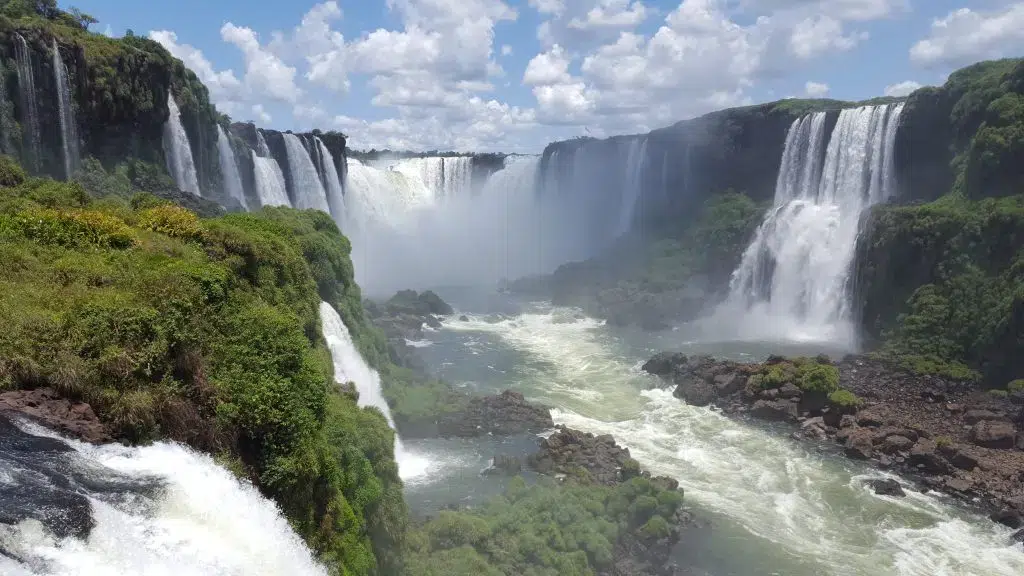
Paraná is often the first stop for travelers entering the south region of Brazil from São Paulo or Rio. Its most famous attraction is Foz do Iguaçu, home to Iguaçu National Park, a UNESCO World Heritage Site on the border with Argentina. The waterfalls are powerful, emotional, and loud in the best possible way. You do not just see them. You feel them.
Curitiba, the capital of Paraná, is one of the most interesting southern Brazil cities for travelers who enjoy parks, museums, public spaces, and cooler weather. The city is especially associated with urban planning and green areas, including places like Jardim Botânico, Parque Tanguá, and Ópera de Arame.
Food lovers should also pay attention to Paraná. One of the state’s most famous dishes is barreado, a slow-cooked beef dish traditionally associated with the coast, especially around Morretes. You may also see pinhão, the seed of the araucaria tree, which is deeply connected to winter food in southern Brazil.

Santa Catarina: Beaches, Blumenau, and Island Life
Santa Catarina is one of the best states in Brazil for travelers who want to mix beaches, culture, seafood, and festivals. Its capital, Florianópolis, is famous for its island lifestyle, surf spots, dunes, lagoons, seafood restaurants, and relaxed coastal energy. If Rio has the dramatic beauty of mountains and sea, Floripa has that island rhythm where the beach shapes the day.
If you are searching for the best beaches in southern Brazil, Santa Catarina will probably appear again and again. Florianópolis, Bombinhas, Praia do Rosa, Guarda do Embaú, and Balneário Camboriú are some of the big names. Balneário Camboriú is especially famous for its tall buildings, nightlife, beach clubs, and modern seaside skyline. Its “Brazilian Dubai” nickname is informal, but it captures the city’s love of height, lights, and beachside drama.
Santa Catarina is not only about the coast. Inland, cities like Blumenau and Pomerode show the strong influence of German immigration in southern Brazil. Blumenau is famous for Oktoberfest Blumenau, promoted as the largest German festival in the Americas. Expect music, dancing, beer, traditional clothes, parades, and a lot of joy.
This is also a great place to talk about Brazilian beer culture. Eisenbahn, a well-known Brazilian beer brand founded in Blumenau, is connected to the region’s German brewing influence and craft beer identity. So, when you visit Santa Catarina, you are not just seeing pretty cities. You are also tasting part of the region’s immigrant history.

Rio Grande do Sul: Gauchos, Wine, and the Far South
Rio Grande do Sul is the southernmost state of Brazil, and it has one of the strongest regional identities in the country. People from Rio Grande do Sul are called gaúchos, and gaucho culture is a huge part of local pride. Here, traditions like churrasco, chimarrão, horseback culture, folk music, and traditional clothing are not just tourist images. They are part of daily life for many people.
Porto Alegre, the capital, is an important cultural and political city, with parks, museums, football culture, nightlife, and a direct local personality. It may not be as postcard-famous as Rio or Salvador, but it is one of the major cities in southern Brazil and an important gateway to the state.
Then there is the Serra Gaúcha, one of the most loved tourism areas in southern Brazil. Cities like Gramado and Canela are famous for mountain scenery, chocolate shops, Christmas events, romantic hotels, and European-inspired architecture. Nearby, the Vale dos Vinhedos is one of Brazil’s most important wine regions and was the first geographical indication officially recognized in the country.
If you thought Brazil was only caipirinhas on the beach, Rio Grande do Sul will happily correct you with wine, cold weather, barbecue, and a hot cuia of chimarrão.

Southern Brazil Climate and Weather
The southern Brazil climate is one of the biggest surprises for visitors. Brazil is famous for heat, but the south of Brazil can get genuinely cold in winter, especially in the highlands and mountain towns. In places like São Joaquim, Urubici, Gramado, Canela, and parts of the Serra Catarinense and Serra Gaúcha, frost can occur, and snow is possible during strong cold waves.
Southern Brazil weather changes a lot by season and location. Summers can be hot, especially on the coast. Winters can be chilly, especially inland and in higher areas. Spring and autumn are often beautiful for travel, with milder temperatures, clearer landscapes, and fewer extremes.
In other words, pack for the Brazil you are actually visiting. Beach clothes may not be enough for a winter trip to the southern highlands.
Beaches on the South Coast of Brazil
The south coast of Brazil has a different feeling. The water can be colder, the landscape changes a lot from place to place, and the beach culture often mixes surf, seafood, summer houses, road trips, and strong seasonal tourism.
Santa Catarina is the star for many beach lovers. Florianópolis alone has dozens of beaches, each with a different personality. Joaquina is famous for surf and dunes. Campeche has open sea and island views. Jurerê is known for beach clubs and upscale nightlife. Lagoinha do Leste is more wild and adventurous, reached by trail or boat.
Balneário Camboriú is more urban and glamorous. Praia do Rosa is more bohemian and nature-focused. Bombinhas is loved for clear water and family vacations. If you are planning southern Brazil vacations and want beaches, Santa Catarina is probably where your map will get very busy.

Culture in Southern Brazil
Southern Brazil culture is shaped by Indigenous roots, Portuguese colonization, African influence, and strong immigration from European communities, especially German, Italian, Polish, Ukrainian, and other groups. This mix appears in the food, architecture, festivals, music, accents, and everyday habits.
But be careful with stereotypes. People sometimes reduce southern Brazil to only its European heritage, but the region is more complex than that. Indigenous peoples were there long before immigration. African and Afro-Brazilian communities also helped shape the region through work, religion, music, food, and local traditions. Brazil is always layered, and the south is no exception.
You will notice these cultural layers in local festivals, food traditions, religious celebrations, and even in the way people speak Portuguese. In Rio Grande do Sul, you may hear expressions like bah and tchê. In Santa Catarina and Paraná, pronunciation also changes from city to city, especially in areas influenced by immigrant communities.
German Towns in Southern Brazil
If you are interested in a German town in southern Brazil, Santa Catarina is a great place to start. Blumenau is the most famous because of Oktoberfest Blumenau, while Pomerode is widely promoted as one of the most German cities in Brazil, with timber-framed architecture, local festivals, German-Brazilian food, and traces of Germanic languages in the community.
These towns are not copies of Germany. They are Brazilian towns with German heritage, which is much more interesting. You can hear Portuguese everywhere, eat Brazilian food next to German-inspired dishes, and see how immigrant culture became part of Brazil’s identity.
This is one of the best things about traveling in Brazil. Every region teaches you that Brazilian culture is not one single thing. It is a conversation between histories, landscapes, languages, and people.
Food and Drink in the South of Brazil
Comida típica do sul do Brasil is serious business. In Rio Grande do Sul, churrasco is one of the strongest food traditions. We are talking about Brazilian barbecue with social meaning: family, friends, fire, meat, conversation, and time. Chimarrão, the traditional hot drink made with erva-mate, is another symbol of the region. Sharing chimarrão is not just drinking tea. It is connection.
In Paraná, barreado is a classic. Pinhão appears often in winter dishes and snacks, especially in areas where araucaria trees are part of the landscape. In Santa Catarina, seafood is essential on the coast, while German-inspired sausages, cakes, and beer culture show up strongly in towns like Blumenau and Pomerode.
The south is also important for Brazilian wine. The Vale dos Vinhedos, in Rio Grande do Sul, is one of the best-known wine tourism destinations in Brazil. It is a great place for couples, food lovers, and anyone who wants to taste a slower, colder, vineyard-filled side of the country.

Nature, Highlands, and Landscapes
The landscapes of southern Brazil are incredibly varied. You can go from beaches to mountains, from forests to canyons, from vineyards to waterfalls, sometimes within the same trip.
The highlands in southern Brazil are especially beautiful. The Serra Gaúcha, Serra Catarinense, and areas around Aparados da Serra and Serra Geral offer dramatic views, cold weather, waterfalls, and canyons such as Itaimbezinho and Fortaleza. These places are perfect for travelers who love nature, photography, hiking, and quiet moments away from big cities.
The araucaria tree is one of the symbols of the region’s vegetation. Its tall, umbrella-like shape gives many southern landscapes a distinctive look. When you see araucarias in the mist, you understand immediately that you are in another Brazil.
Is Southern Brazil Safe?
Many travelers ask: is southern Brazil safe? The honest answer is that safety depends on the city, neighborhood, time of day, and your behavior, just like anywhere in Brazil. Tourist areas in Florianópolis, Gramado, Canela, Blumenau, Curitiba, Foz do Iguaçu, and the wine region are popular with visitors, but big cities still require normal urban awareness.
Use registered transport, avoid flashing valuables, pay attention at night, and ask locals about areas to avoid. Brazil is beautiful, but smart travel habits matter everywhere.

Flooding, Storms, and Natural Events in Southern Brazil
Southern Brazil has beautiful landscapes, but it can also face serious natural events. Heavy rain, flooding, cyclones, strong winds, and even tornadoes can occur in the region. Rio Grande do Sul suffered severe flooding in April and May 2024, one of the most serious climate-related disasters in Brazil’s recent history.
This does not mean you should avoid the region. It means you should check the weather in southern Brazil before traveling, follow local guidance, and stay flexible with your plans during periods of heavy rain or storms.
And what about rare southern lights in Brazil? They are extremely unusual, but strong geomagnetic storms can occasionally create aurora-like events visible in far southern parts of the country. In January 2026, a rare aurora was reported over Cambará do Sul, in Rio Grande do Sul. Still, this is not something to plan a trip around. Think of it as a magical bonus from the universe, not a guaranteed tourist attraction.
Why Visit Southern Brazil?
Southern Brazil tourism is perfect for travelers who want variety. You can visit Iguaçu Falls in Paraná, enjoy beaches in Santa Catarina, drink wine in Rio Grande do Sul, party at Oktoberfest Blumenau, explore Florianópolis, relax in Gramado, discover Curitiba, and eat your way through German, Italian, gaucho, coastal, and Brazilian flavors.
It is also a great region for language learners. The Portuguese is real, diverse, and full of regional expressions. You will hear different accents, local slang, and cultural references that show how rich Brazilian Portuguese can be.
Southern Brazil shows you that Brazil is not one postcard. It is a whole country of surprises. And the more Portuguese you learn, the more those surprises open up.
So, when you come to Brazil, do not stop at the places you already know. The south of Brazil is waiting with cold mornings, warm food, strong traditions, beautiful beaches, mountain towns, and a completely different rhythm of Brazilian life.
Bora conhecer o sul do Brasil?
Click on the links below to see more related Dicas
Paraná,
Santa Catarina
Rio Grande do Sul
Oktoberfest Blumenau

SEO Content Specialist at Rio & Learn Portuguese School. A native English speaker who arrived in Brazil six months ago and quickly fell in love with the country, Tom focuses exclusively on Brazil-focused content. He combines data-driven keyword research with careful fact-checking in collaboration with Rio & Learn’s Brazilian teachers.
PakarPBN
A Private Blog Network (PBN) is a collection of websites that are controlled by a single individual or organization and used primarily to build backlinks to a “money site” in order to influence its ranking in search engines such as Google. The core idea behind a PBN is based on the importance of backlinks in Google’s ranking algorithm. Since Google views backlinks as signals of authority and trust, some website owners attempt to artificially create these signals through a controlled network of sites.
In a typical PBN setup, the owner acquires expired or aged domains that already have existing authority, backlinks, and history. These domains are rebuilt with new content and hosted separately, often using different IP addresses, hosting providers, themes, and ownership details to make them appear unrelated. Within the content published on these sites, links are strategically placed that point to the main website the owner wants to rank higher. By doing this, the owner attempts to pass link equity (also known as “link juice”) from the PBN sites to the target website.
The purpose of a PBN is to give the impression that the target website is naturally earning links from multiple independent sources. If done effectively, this can temporarily improve keyword rankings, increase organic visibility, and drive more traffic from search results.