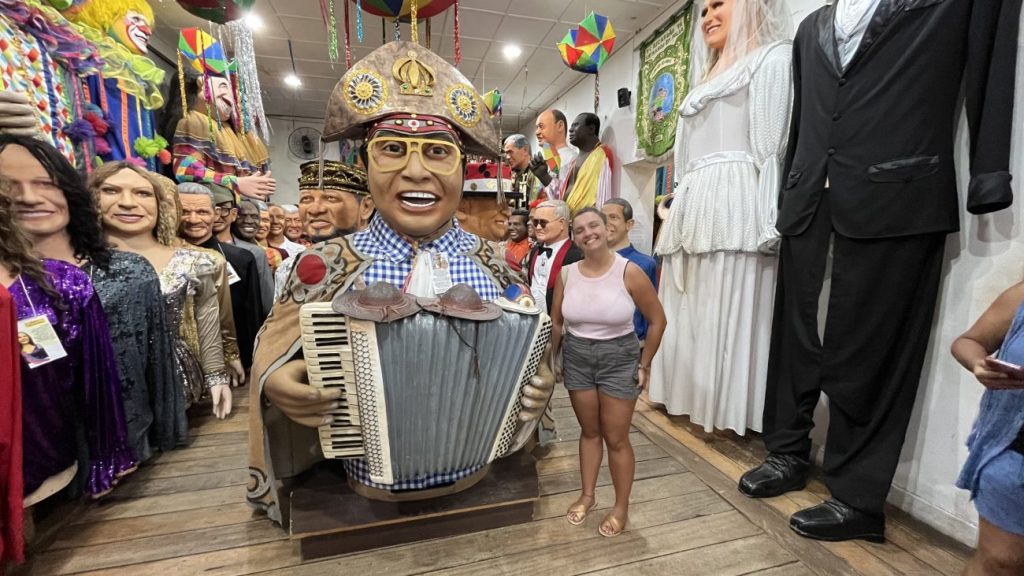

Recife has a soundtrack that changes from one neighborhood to the next. In the historic center, you hear frevo and maracatu, while other parts of the city pulse with forró, manguebeat, brega, and brega funk. Together, these sounds tell the story of a city that never stopped creating music.
For foreigners discovering Brazil, Recife music is one of the best ways to understand the soul of Pernambuco. It is joyful, rebellious, emotional, theatrical, and deeply connected to the streets.
To understand the music of Recife, you need to listen to four powerful sounds: frevo, maracatu, manguebeat, and brega. Each one tells a different part of the city’s story.

Why Recife Has One of Brazil’s Richest Music Scenes
When people think of Brazilian music, they often recall Rio de Janeiro’s samba, bossa nova, funk, or forró. But the music of Recife has a universe of its own.
Recife is a coastal city in Northeastern Brazil, full of bridges, rivers, colonial history, Afro-Brazilian culture, Carnival traditions, and creative energy. There, you can hear European-influenced brass bands, African drums, Indigenous elements, street poetry, political resistance, and modern urban culture in the same city.
This blend gives Recife’s music a unique power. It is festive, but it can also be serious. It is traditional, but never trapped in the past, because the people of Pernambuco do not forget their history; they celebrate it.
Frevo: Recife’s Carnival Soundtrack
Frevo is fast, explosive, joyful, and almost impossible to listen to while standing still. The name comes from the Portuguese verb ferver, meaning “to boil.” In popular speech, people used to say frever, as if the street itself were boiling with music, heat, dance, and Carnival energy.
Frevo is strongly connected to Recife Carnival and Olinda Carnival. Imagine colorful umbrellas, brass orchestras, dancers jumping and spinning, and streets packed with people following the rhythm. The music is intense, with trumpets, trombones, saxophones, tubas, and percussion pushing the crowd forward.
Frevo is both music and movement. The dance, called passo, is athletic, playful, and full of quick footwork. Dancers often carry small colorful umbrellas, which became one of the most famous symbols of frevo.
Frevo is not only a local party rhythm. It was recognized as Brazilian intangible cultural heritage by IPHAN in 2007 and as UNESCO Intangible Cultural Heritage of Humanity in 2012. In Recife Antigo, Paço do Frevo works as a museum and cultural reference center dedicated to preserving, researching, teaching, and celebrating frevo throughout the year.
That makes frevo one of the clearest examples of Recife music: popular in the street, serious in its history, and powerful enough to become a symbol of Brazilian culture.
Maracatu: The Drumbeat of Afro-Brazilian Recife
Maracatu is one of the most powerful musical traditions in Pernambuco. It is deeply connected to Afro-Brazilian history, spirituality, resistance, and community. The drums are strong, heavy, and ceremonial. When a maracatu group passes, you do not just hear the music. You feel it in your chest.
Photos can only tell part of the story. Watch the video below to experience the energy of a live maracatu parade.
Maracatu traditions are especially visible during Recife Carnival, but they are much more than a party. Maracatu comes from historical coronation ceremonies connected to Black communities and Afro-Brazilian religious culture. Many groups include royal characters, such as kings, queens, court members, and symbolic figures.

The music is led by percussion, especially large drums called alfaias. One of the most famous forms is maracatu nação, also called maracatu de baque virado. These groups are cultural communities with history, leaders, rehearsals, costumes, songs, and identity.

A powerful Recife event connected to maracatu is the Noite dos Tambores Silenciosos, held during Carnival at Pátio do Terço. The ceremony brings together maracatu nations and honors Afro-Brazilian ancestry, memory, and resistance. It is one of those moments when Recife music becomes more than performance. It becomes remembrance.
Manguebeat: Recife’s Modern Musical Revolution
In the 1990s, Recife was facing violence, unemployment, hunger, and social crisis. Out of that difficult context came one of the most creative movements in modern Brazilian music: manguebeat.
The movement was shaped by the image of the mangue, the mangrove. Recife is a city of rivers, bridges, mud, crabs, and mangrove ecosystems, and manguebeat turned that landscape into a cultural symbol. The idea was not to copy music from Rio, São Paulo, Europe, or the United States. It was to plug Recife into the world without cutting its roots.
A key text behind the movement was the 1992 manifesto Caranguejos com Cérebro, meaning “Crabs with Brains.” Written by Fred Zero Quatro, from Mundo Livre S/A, it became one of the founding documents of manguebeat.

The most famous name connected to the movement is Chico Science, with Nação Zumbi. Their 1994 album Da Lama ao Caos helped give visibility to Pernambuco’s music scene and mixed maracatu, funk rock, hip-hop, electronic textures, heavy percussion, and sharp urban lyrics. Songs like “A Cidade,” “A Praieira,” “Samba Makossa,” “Rios, Pontes & Overdrives,” and “Da Lama ao Caos” are essential listening for anyone who wants to understand Recife music.
Manguebeat proved that Brazilian regional culture could be modern, urban, experimental, and globally relevant without losing its accent.
The Music Events Recife Is Known For
The biggest music event in Recife is Carnival. Recife Carnival and nearby Olinda Carnival are among the most important Carnival celebrations in Brazil, especially for anyone who wants to experience frevo, maracatu, street orchestras, giant puppets, costumes, dancing, and music filling the historic center.
One of Recife Carnival’s biggest symbols is Galo da Madrugada. Founded in Recife in 1978, it parades on Carnival Saturday through central Recife and is recognized by Guinness World Records as the largest Carnival block in the world. For visitors, it is one of the most intense ways to see how frevo works outside a museum: brass bands, dancers, costumes, crowds, and the whole city moving together.
Carnival in Recife is not only about frevo. You can also hear maracatu groups, afoxé, caboclinho, samba, brega, forró, and contemporary Brazilian music. That is what makes Recife Carnival so rich. Different traditions share the same streets.

São João is another major period for music in Recife and the Northeast. Recife’s June Festival programming celebrates forró, coco, ciranda, xaxado, quadrilha, and other regional traditions. In 2025, the official São João do Recife program announced more than 1,200 presentations across 14 festival hubs from June 12 to 29.
In Recife, you can visit different venues to dance forró, eat traditional food, and enjoy quadrilha, the traditional June Festival dance.

The photo above was taken at Sítio da Trindade, a historic park in the Casa Amarela neighborhood that becomes one of the city’s liveliest gathering places during São João. Its grounds fill with forró music, traditional food, folk performances, and thousands of people celebrating one of Pernambuco’s most beloved festivals.
So if you are looking for music events in Recife Brazil, think beyond one concert venue. Recife music lives in Carnival parades, June Festivals, museums, bars, theaters, cultural centers, public squares, and street celebrations.
Some of the Biggest Artists Connected to Recife
You cannot talk about music from Recife and Pernambuco without mentioning Alceu Valença. His songs mix frevo, forró, rock, folk, romantic poetry, and Carnival energy. His song “Voltei, Recife” is one of the clearest musical postcards to the city, full of saudade, frevo, Carnival references, and the feeling of returning to a place that still lives in the body.
Chico Science is another essential name. With Nação Zumbi, he helped turn manguebeat into one of Brazil’s most original musical movements of the 1990s. The band came from Recife and became known for mixing Pernambuco popular culture with rock, funk, hip-hop, heavy percussion, and experimentation.
Mundo Livre S/A also belongs in this story. Fred Zero Quatro, the band’s vocalist, wrote the manifesto Caranguejos com Cérebro, one of the founding texts of manguebeat.
Lenine, born in Recife in 1959, became one of Brazil’s most respected singer-songwriters, mixing Brazilian rhythms, poetic lyrics, guitar work, pop, rock, and experimental sounds.
These artists show why Recife music cannot be reduced to one genre. The city gave Brazil Carnival anthems, Afro-Brazilian drum traditions, brega emotion, forró nights, and one of the most inventive urban music movements of the late 20th century.
Recife Is Not Only Frevo, Maracatu and Manguebeat
Frevo, maracatu, and manguebeat are essential, but Recife also has a huge brega scene, strong forró culture, romantic music, pop, rock, rap, electronic parties, and live music venues.
Brega music is especially important in Recife’s popular culture. It is emotional, dramatic, romantic, sometimes funny, and very loved. Recife is often associated with brega and brega funk, styles that show another side of the city: urban, popular, direct, and full of feeling.
Forró is another essential rhythm in Recife and throughout Northeast Brazil. If you visit the city, you may find forró nights, dance events, and parties where people dance in pairs to accordion, zabumba, and triangle.
Brega Is the Soundtrack of Everyday Life in Pernambuco
In Pernambuco, brega is much more than a musical genre. Pará is also famous for its own brega scene, but Pernambuco’s brega stands out for the role it plays in everyday life. You hear it in neighborhood bars, at family gatherings, at street parties, and at massive concerts that draw thousands of people.
Emotional, dramatic, romantic, and proudly popular, brega has influenced fashion, slang, dance, and the way many Pernambucans express love, heartbreak, and joy. While frevo is closely associated with Carnival, brega is music many locals listen to all year round.
In Pernambuco, brega draws influences from reggaeton, funk carioca, funk paulista, forró, and other genres. One famous brega song is “Baby Fala pra Mim” by Musa do Calypso, a track also performed by the forró group Desejo de Menina. It is a Brazilian version of the French song “Quelqu’un m’a dit,” written and performed by Carla Bruni.
No introduction to Pernambuco’s brega is complete without a few unforgettable names. Reginaldo Rossi, known across Brazil as the King of Brega, turned heartbreak into singalongs with classics like “Garçom,” “A Raposa e as Uvas,” and “Em Plena Lua de Mel.” A newer generation found its own icons in Priscila Senna, one of the biggest voices of brega calypso, and Raphaela Santos, often called A Favorita.
Whether you are dancing at a neighborhood party or just curious about Recife’s popular culture, adding these artists to your playlist is one of the easiest ways to understand why brega means so much to Pernambuco.
Welcome to the World of Brega Funk
Whether it is romantic brega danced in pairs at local venues known as bregas or the high-energy world of brega funk, Recife’s popular music scene offers a very different side of local nightlife. One common phrase is ir para o brega, which means going to one of these venues to enjoy a night out with friends.
Brega funk emerged in Recife by blending traditional brega with influences from funk carioca, electronic beats, and local rhythms. With its energetic sound, catchy lyrics, and unmistakable dance moves, it quickly became one of the most popular genres among younger generations. Today, brega funk dominates parties, festivals, social media, and streaming platforms, proving that Recife continues to shape Brazil’s contemporary music scene.
One of brega funk’s biggest recent dance trends is the Passinho do Jamal. Born from Recife’s brega funk universe, the choreography spread quickly through social media and shows how a dance from local popular culture can travel far beyond its original neighborhood.
Curious about brega funk? Start with Anderson Neiff. If you spend a weekend in Recife, chances are you will hear one of his songs before you even learn his name. Tracks like “Tua Ex é uma Delícia” and “Golf Roubado” have become favorites at parties, on packed dance floors, and on social media thanks to their catchy beats and choreography.
Then add Shevchenko & Elloco to your playlist with songs like “Tome Empurradão,” “Tributo Michael Jackson,” and “Gera Bactéria.” Around here, standing still is usually the hardest part.
Listening to brega funk is one of the easiest ways to discover a side of Recife that most tourists never experience. The genre was born in the city’s favelas and quickly became the soundtrack of a generation, mixing stories of romance, friendship, ambition, parties, and everyday life.
Its influence goes far beyond music. It sets fashion trends, popularizes dance moves, inspires slang, and turns soccer jerseys, jewelry, motorcycles, and beach style into symbols of local identity. What starts in Recife’s neighborhoods often ends up spreading across Brazil.
How Recife Music Helps You Learn Portuguese
Music is one of the best ways to learn Portuguese because it gives words emotion. When you listen to Recife music, you hear accents, slang, rhythm, history, and feeling.
Here are some useful Portuguese words and phrases connected to Recife music:
Recife Music Is a Door Into Brazil
Recife music is powerful because it carries so many sides of the city at once. Frevo brings the speed, color, and excitement of Carnival. Maracatu brings the drums, ancestry, and Afro-Brazilian memory. Manguebeat brings the mud, the city, the protest, and the invention. Brega and brega funk bring everyday emotion, nightlife, dance, and popular culture into the same story.
Together, these sounds show a Recife that is historic and modern, joyful and political, popular and poetic. It is a city where tradition does not stay frozen in the past. It keeps moving, mixing, and finding new ways to speak.
For foreigners, discovering Recife music is also a way to discover Brazil beyond the obvious. Brazil is not one rhythm, one accent, one city, or one story. Brazil is many Brazils.

Music is woven into everyday life in Recife. You will find it in public art, statues honoring local musicians, restaurant names, conversations, and rhythms that seem to follow you wherever you go. Visit one of the city’s music museums, and you will discover the stories behind these sounds. In some places, you can even try playing the instruments yourself.
So listen to frevo. Feel the maracatu drums. Discover manguebeat. Dance to forró. Sing along to brega. Try a few brega funk dance moves. Let Recife show you a different side of Brazilian culture.
Click on the links below to see more related Dicas
Famous Brazilian Songs
Alceu Valença
Frevo
Dances From Brazil

SEO Content Specialist at Rio & Learn Portuguese School. A native English speaker who arrived in Brazil six months ago and quickly fell in love with the country, Tom focuses exclusively on Brazil-focused content. He combines data-driven keyword research with careful fact-checking in collaboration with Rio & Learn’s Brazilian teachers.
PakarPBN
A Private Blog Network (PBN) is a collection of websites that are controlled by a single individual or organization and used primarily to build backlinks to a “money site” in order to influence its ranking in search engines such as Google. The core idea behind a PBN is based on the importance of backlinks in Google’s ranking algorithm. Since Google views backlinks as signals of authority and trust, some website owners attempt to artificially create these signals through a controlled network of sites.
In a typical PBN setup, the owner acquires expired or aged domains that already have existing authority, backlinks, and history. These domains are rebuilt with new content and hosted separately, often using different IP addresses, hosting providers, themes, and ownership details to make them appear unrelated. Within the content published on these sites, links are strategically placed that point to the main website the owner wants to rank higher. By doing this, the owner attempts to pass link equity (also known as “link juice”) from the PBN sites to the target website.
The purpose of a PBN is to give the impression that the target website is naturally earning links from multiple independent sources. If done effectively, this can temporarily improve keyword rankings, increase organic visibility, and drive more traffic from search results.