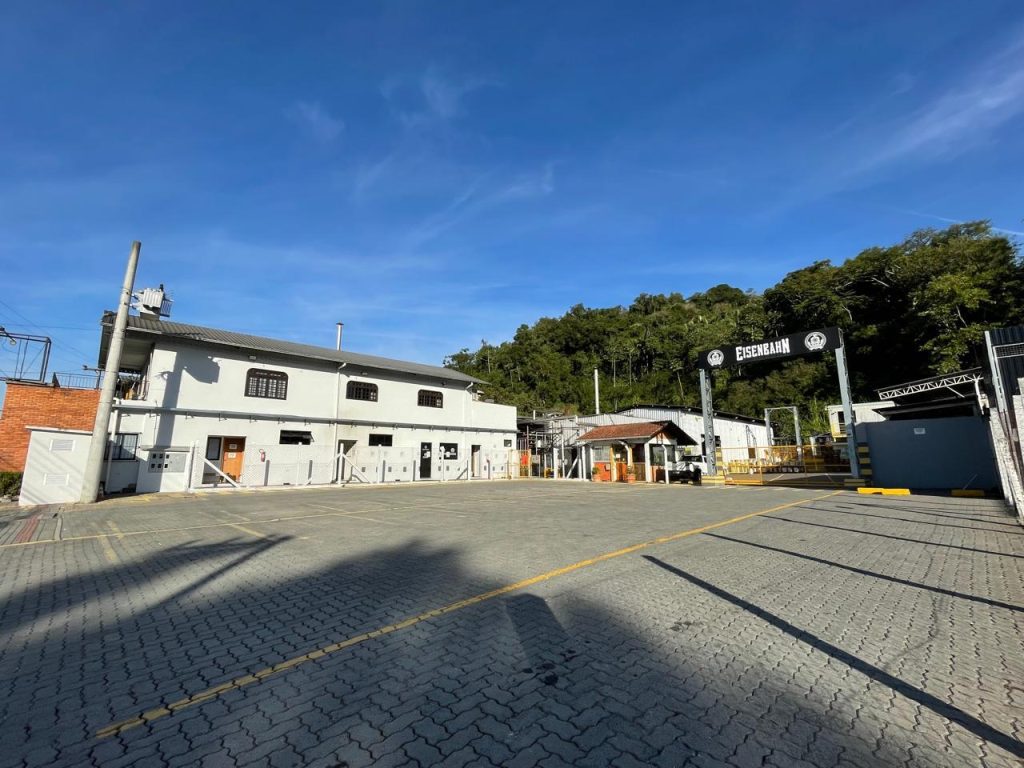

Hey, galera! In today’s Dica, we are going to talk about Eisenbahn, a Brazilian beer with a German name, a home in Blumenau, and a story that takes us straight into the German-Brazilian culture of Santa Catarina.
Brazil is not only caipirinhas on the beach and samba in Rio. Sometimes Brazil also looks like a German-style beer hall in southern Brazil, a cold glass of craft beer, and a city where Oktoberfest is part of local identity.
At first, the name may surprise you. Eisenbahn is German, not Portuguese, and it means “railway” in English. In Portuguese, a natural translation would be estrada de ferro or ferrovia. But the beer itself is Brazilian, born in Blumenau, Santa Catarina, one of the most German-influenced cities in Brazil.
Why Is It Called Eisenbahn?
In Portuguese, Eisenbahn can be understood as trilho de trem, estrada de ferro, or ferrovia. The name also has a local story connected to Blumenau itself.
Eisenbahn was created near the area where the old EFSC railway, the Estrada de Ferro Santa Catarina, used to pass through Blumenau. By the time the brewery was founded, the railway was no longer operating there in the same way, but the memory of the train still belonged to the city’s landscape and history.
That is why the name works so well. It is German, it connects to Blumenau’s railway past, and it gives the brand a strong local identity. Even before you taste the beer, the name already points to southern Brazil, German heritage, and the history of a city shaped by immigration, industry, and beer culture.

Blumenau: The Home of Eisenbahn
Eisenbahn’s story starts in Blumenau, and the city explains a lot about the beer.
Blumenau is a city in Santa Catarina, in the south of Brazil. It is famous for its German heritage, its architecture, its breweries, and the biggest Oktoberfest celebrations outside Germany. Walk through parts of the city and you can feel that German-Brazilian identity in the buildings, the food, the festivals, and, of course, the beer.
This comes from the history of German immigration to the region. In the nineteenth century, many German immigrants settled in southern Brazil, especially in areas of Santa Catarina and Rio Grande do Sul. Over time, their traditions mixed with Brazilian life, creating something unique: not Germany, not the typical image many foreigners have of Brazil, but a German-Brazilian culture with its own flavor.
Blumenau is a reminder that Brazil is not one single image. From Rio’s beaches to the German-Brazilian beer culture of Santa Catarina, every region has its own rhythm, history, and flavor. Learn Portuguese with us in Copacabana, and you will not just visit Brazil, you will understand it in layers.
Experiencing Eisenbahn in Blumenau
For travelers, Eisenbahn makes more sense when you connect it to Blumenau itself. This is not the beach-and-samba image many visitors first imagine when they think of Brazil. It is southern Brazil: German-Brazilian architecture, Oktoberfest, local breweries, and food traditions shaped by immigration.
That is why tasting a beer like Eisenbahn in Blumenau feels different from simply finding it in a supermarket. It becomes part of the place. You might enjoy it with German-Brazilian dishes such as marreco recheado (stuffed duck), sausages, pork specialties, or traditional desserts.
And if you order it in Portuguese, the experience becomes even richer. You are not just reading about Brazilian culture anymore. You are using the language inside it.

From Microbrewery to Award-Winning National Brand
Eisenbahn was founded in Blumenau in 2002, originally as a microbrewery with a focus on higher-quality, craft-style beer. At the time, Brazil’s beer market was still dominated by lighter, mass-market beers, so Eisenbahn helped introduce more people to different styles and stronger brewing traditions.
That is one reason Eisenbahn matters. It did not come from one of Brazil’s usual cultural postcards. It came from Blumenau, a city where German-Brazilian heritage and beer culture already had deep roots, and it helped show that Brazilian beer could also be diverse, technical, and internationally recognized.
The brand’s identity was built around German inspiration, but with a Brazilian path. It started locally, connected to Blumenau’s brewing culture, and later became known across Brazil. Today, Eisenbahn is part of HEINEKEN Brasil, and the group describes the brand as having more than 130 national and international awards.
Even so, Eisenbahn’s cultural identity is still tied to Blumenau, Santa Catarina, German-style brewing, and southern Brazilian beer tradition.

Eisenbahn Beer Styles
Eisenbahn has several beer styles, from lighter options like Pilsen to stronger, darker, and more aromatic beers.
- Eisenbahn Pilsen is one of the most familiar options. It is light, crisp, and close to what many people expect from a classic beer in Brazil.
- Eisenbahn Pale Ale has more aroma and flavor, usually a good option for someone who wants something more interesting without going too intense.
- Eisenbahn IPA, Session IPA, and American IPA are more bitter and aromatic, with stronger hop character. These styles became popular in Brazil as more people started exploring craft beer.
- Eisenbahn Unfiltered, is popular with people looking for a beer with more texture and character.
- Eisenbahn Weizenbier, Weiss, or trigo connects more directly with wheat beer traditions. In Portuguese, trigo means “wheat.”
- Eisenbahn Dunkel and Eisenbahn preta are darker options. Preta means “black” or “dark” when people are talking casually about beer color.
- Eisenbahn Strong Golden Ale is another style people search for because it is stronger and more intense than a basic Pilsen.

Portuguese Practice: Ordering Eisenbahn in Brazil
Here is a short dialogue you might use in a Brazilian bar or restaurant:
Boa noite! Tem Eisenbahn?
Temos sim. Temos Pilsen, IPA e Pale Ale.
Qual é a mais leve?
A Pilsen é a mais leve. A IPA é mais amarga.
Então vou querer uma Eisenbahn Pilsen bem gelada, por favor.
Good evening! Do you have Eisenbahn?
Yes, we do. We have Pilsen, IPA, and Pale Ale.
Which one is the lightest?
The Pilsen is the lightest. The IPA is more bitter.
Then I’ll have a very cold Eisenbahn Pilsen, please.
In Brazil, this phrase matters. Beer is usually served extremely cold, and many Brazilians will judge a bar by how cold the beer is. If you can order uma cerveja bem gelada in Portuguese, you are already closer to sounding natural.
And if you want to go beyond phrases and actually live the language, our Portuguese immersion programs in Rio de Janeiro and Recife put you inside real Brazilian situations every day, from ordering at bars and restaurants to understanding the culture, accents, and local expressions around you.
A Beer That Shows Another Side of Brazil
Eisenbahn is more than a Brazilian beer with a German name. It is a small cultural trip to Blumenau, Santa Catarina, where German immigration, local festivals, brewing traditions, and Brazilian creativity all meet in the same glass.
That is one of the beautiful things about learning Portuguese. You do not just learn how to say “beer” or order a drink. You begin to understand the stories behind the places, the names, the accents, and the traditions.
Maybe your first dream of Brazil is Rio de Janeiro, Copacabana, samba, and sunny beach days. Perfect. We certainly love that Brazil too. But when you go deeper, Brazil also becomes Blumenau, Oktoberfest, German-style beer, and a cold Eisenbahn shared with friends.
Até a próxima, galera! See you in our next Dica.
Click on the links below to see more related Dicas
Blumenau
Santa Catarina
Oktoberfest

SEO Content Specialist at Rio & Learn Portuguese School. A native English speaker who arrived in Brazil six months ago and quickly fell in love with the country, Tom focuses exclusively on Brazil-focused content. He combines data-driven keyword research with careful fact-checking in collaboration with Rio & Learn’s Brazilian teachers.
PakarPBN
A Private Blog Network (PBN) is a collection of websites that are controlled by a single individual or organization and used primarily to build backlinks to a “money site” in order to influence its ranking in search engines such as Google. The core idea behind a PBN is based on the importance of backlinks in Google’s ranking algorithm. Since Google views backlinks as signals of authority and trust, some website owners attempt to artificially create these signals through a controlled network of sites.
In a typical PBN setup, the owner acquires expired or aged domains that already have existing authority, backlinks, and history. These domains are rebuilt with new content and hosted separately, often using different IP addresses, hosting providers, themes, and ownership details to make them appear unrelated. Within the content published on these sites, links are strategically placed that point to the main website the owner wants to rank higher. By doing this, the owner attempts to pass link equity (also known as “link juice”) from the PBN sites to the target website.
The purpose of a PBN is to give the impression that the target website is naturally earning links from multiple independent sources. If done effectively, this can temporarily improve keyword rankings, increase organic visibility, and drive more traffic from search results.