
Hey soccer fans!
Brazil and the World Cup are always a huge story, but this time there is an extra twist. The most iconic national team in football history is heading toward 2026 with Carlo Ancelotti in charge. And this is not just interesting because of his name or his trophies. It is historic.
He is not the first foreign coach in Brazil’s history, but he is the first permanent foreign manager of the Seleção in more than 60 years and the first European to take the role in the modern era. That already makes this much bigger than a normal coaching change. When it comes to Brazil, the Seleção is tied to pride, identity, memory, and the kind of pressure that never really disappears.
So when a move like this happens, people do not just ask whether Carlo Ancelotti is coaching Brazil. They also start thinking about what this decision says about Brazilian football right now, what it says about the pressure to win again, and whether this could be the move that brings Brazil closer to the hexa.
In this Dica, we are going to explore those questions and get to know the legendary coach and former player now leading one of the biggest teams in world football.
Why Carlo Ancelotti Feels So Historic to Brazil
Brazil does not look at the national team as just another team. The Seleção is memory, emotion, and pride all rolled into one yellow shirt. It carries joy, heartbreak, national expectation, and the kind of football mythology that very few countries can match.
That is why Carlo Ancelotti’s arrival feels so unusual. For generations, Brazil has seen the Seleção as something deeply connected to its own football soul. So when a foreign coach steps in, the story quickly grows beyond formations, tactics, or squad lists. It turns into something cultural, symbolic, and big enough to get the whole country talking.
Of course, Ancelotti is not the first foreign coach in Brazil’s history. The Seleção had already been led by Ramón Platero of Uruguay, Joreca of Portugal, and Filpo Nuñez of Argentina. But those were brief and very different moments, which is exactly why Ancelotti’s appointment still feels so historic now. Brazil has looked abroad before, but only rarely, and never with this kind of long-term weight, visibility, and expectation.
In some ways, this move feels like Brazil looking at itself with a little more honesty. The country still has extraordinary talent, global prestige, and one of the richest football traditions on the planet. Still, recent years have also brought frustration, inconsistency, and that uncomfortable feeling that talent alone does not always save the day. Bringing in Ancelotti feels like a bold break from tradition, but also like a smart response to a very real problem.
And that is where the story really opens up. Because this is not just about a manager. It is about football in Brazil, where one move like this can carry the weight of history, expectation, a country still dreaming of the hexa.
Who Is Carlo Ancelotti, and Why Did Brazil Want Him?
Carlo Ancelotti is one of the most respected managers in football history, known for winning at the highest level with a calmness that is unusual in high-pressure sports. His reputation is built on control and trust rather than chaos. This intelligence dates back to his time as a high-level midfielder, where he was known for his composure and tactical understanding rather than just flash or spectacle. Brazil chose him because the Seleção doesn’t need more drama; it needs a leader who can organize elite talent and make a team of stars function as a single unit.
And since we mentioned stars, Ancelotti also arrives with something important for this specific job: familiarity with Brazilian players. He may be foreign to the Seleção role, but he is not foreign to Brazilian football talent. That matters a lot when your mission is to build a World Cup side around major personalities, rising stars, and enormous national expectations.

Carlo Ancelotti the Player
Before becoming one of the most successful coaches in football, Ancelotti was a high-level midfielder with a reputation for intelligence, composure, and tactical understanding.
He was not the kind of player remembered for flash or spectacle, but was the kind of player who brought order, read the game well, and helped the team function.
That part of his story matters because it helps us understand him more fully. He did not arrive in football as a famous name from the sidelines alone. He knew the rhythm, pressure, and discipline of top-level football long before he started leading from the bench.
Carlo Ancelotti, the Manager
As a manager, though, this is where his name became legendary.
Ancelotti built his career through elite clubs, major trophies, and an impressive ability to work with some of the biggest stars in the sport. He is strongly associated with Champions League success, but also with something Brazil has been searching for: balance. His teams usually look organized without feeling rigid, and competitive without losing quality.
That is a big reason why the Brazil move makes sense. The Seleção already has talent, flair, and players who can change a game in a second. What it has often lacked is the right structure to make all of that talent work together consistently.
Ancelotti’s appeal is not that he takes creativity away, but that he knows how to give it more balance and direction.

Carlo Ancelotti’s Situation With Brazil Right Now
Now that Ancelotti is truly in charge, the mood around Brazil has changed. This is no longer about rumors, waiting, or endless speculation. It is about preparation, decisions, pressure, and the kind of team he is beginning to shape for the road to the 2026 World Cup.
And for Brazilians, that stage is never quiet for long. Squad call-ups spark debate. Tactical tests are picked apart. Interviews are read for every little sign. The Seleção is never treated lightly, and with a name like Carlo Ancelotti on the bench, each move carries even more weight.
All of this also lives inside a country where football is woven into daily life, through club rivalries, neighborhood loyalties, family arguments, and constant emotional investment. More than anything, this shows a national-team story can feel so big here in Brazil. It always connects to the wider football culture that people live every single week.
The Squad Questions Everyone Is Watching
This is where things get especially interesting. Not because Brazil is short on talent, but because finding the right balance may be one of the biggest parts of Ancelotti’s job.
Vinícius Júnior sits right at the heart of that conversation. He feels like one of the clearest faces of modern Brazilian football: explosive, creative, and expected to shine on the biggest stage. Around him are names like Rodrygo and Endrick, players who bring quality right now and excitement for what Brazil could become in the years ahead.
More experienced figures, such as Casemiro or Richarlison, add another layer to the debate. Brazil is not only choosing names. It is also choosing a direction. How much should the team rely on trusted experience, and how much should it lean into renewal? That balance may say a lot about how Ancelotti wants this Brazil team to grow on the way to the World Cup.
That is the thing about Brazil: even a squad list can set off a national debate. One name in or out is enough to get people talking about form, trust, timing, and the future of the Seleção. And if you know a little about modern Brazilian football, you are probably asking: Is Neymar playing in the 2026 World Cup? Well, well, well… who knows…
What Kind of Brazil Team Is Ancelotti Trying to Build?

When people think of Brazil, they usually think of football with a little extra magic, like: dribbling, flair, freedom, boldness, and that joyful way of attacking that makes the game feel alive. That image is real, and it is a big part of what makes Brazil so fascinating on the pitch. But modern football asks for more than beauty alone. It also asks for structure, balance, defensive strength, and the ability to stay calm when the pressure starts to rise.
That helps explain why Ancelotti makes so much sense for this moment.
He is not coming to Brazil to erase its football identity. He is coming to give it more balance. His big challenge is to build a team that still feels Brazilian in its talent and imagination, but stronger in its organization and more solid in the hardest moments. In other words, he needs to shape a Brazil side that can dazzle when the moment is open and stay strong when the game gets tough.
And that is exactly what makes this project so interesting. The dream is still beautiful football, of course, no one wants Brazil to lose that sparkle, but the real goal is to build a team that can handle pressure, survive difficult matches, and go through the emotional roller coaster of a World Cup without losing itself.
The Stars He Must Unlock
Two names stand out right away here: Vinícius Júnior and Endrick.
Vinícius Júnior feels like the player carrying so much of the present on his shoulders. He is already a global star, already linked to huge expectations, and already seen as one of the main faces of the Seleção. Endrick brings a different kind of excitement. He feels like the future arriving early, full of promise, energy, and that special buzz Brazil always loves in a young talent.
The big question is whether Ancelotti can do more than simply pick great players. What matters now is whether he can make them click together, turn individual brilliance into something more complete, and build a Brazil team that feels strong from start to finish, not just dangerous in flashes.
That might become one of the biggest questions in Brazil’s road to the World Cup.
Can Ancelotti Really Adapt to Brazil?
This is where the story gets even more interesting, because now it is not just about football. It is also about people, culture, language, and the emotional world that surrounds the Seleção.
Coaching Brazil takes much more than tactical knowledge. It also takes sensitivity, connection, and a real understanding of what the yellow shirt means. The manager of Brazil is never just a coach on the sidelines. He also becomes a national figure, just like names such as Parreira and Zagallo once were, constantly watched, discussed, and judged by the media, the supporters, and the mood of the whole country. That responsibility now belongs to Ancelotti.
That is one reason so many people are curious about Ancelotti’s relationship with Brazil beyond the pitch. People want to see how he handles the noise, how he connects with the torcida, how he sounds in interviews, and how naturally he adapts to both the language and the emotional intensity of Brazilian football.
And that is part of what makes this story so Brazilian. In football here, language, emotion, and identity are always walking together. If stories like this make you want to understand Brazil more deeply, our Rio & Learn Portuguese courses are a great way to connect with the language, the culture, and the real everyday life behind the headlines.
What Brazil Expects From Carlo Ancelotti at the 2026 World Cup

Everything comes back to one word: hexa.
For many countries, a strong World Cup can mean reaching the quarterfinals, surprising everybody, or simply earning respect. For Brazil, the emotional scale is different. The dream is the sixth title, and honestly, it is always the sixth title. That is also part of the reason why the pressure around Ancelotti already feels enormous, even before the tournament begins.
His prestige brings hope, but it also raises the bar. People do not look at his résumé and think, “Maybe Brazil will have a decent tournament.” They look at it and think, “Maybe this is the man who can finally take us to the hexa.”
That is what makes the story so fascinating. Brazil has placed one of the biggest dreams in world football in the hands of a manager from outside its own tradition. It is a bold move, but it also says a lot about where Brazilian football is right now. More than anything, it shows how badly Brazil wants to turn all that talent into a team that can truly go all the way.
And this is also where football and language come together so beautifully. In the Brazilian football world, the World Cup is never just a tournament. It becomes a national emotional season, full of chants, expressions, rituals, and shared feelings that show just how deeply football lives inside the culture.
Carlo Ancelotti and Brazil: A New Accent for an Old Dream

That is what makes this story so interesting. Brazil’s dream has not changed. The pressure has not changed. The hope has not changed. What has changed is the voice leading that dream.
Carlo Ancelotti arrives as both an outsider and a symbol of what Brazil seems to be searching for right now: calm, authority, and a way to turn extraordinary talent into a complete team. Whether it works or not, this is going to be one of the most fascinating football stories to follow, because coaching Brazil is never just a football job. It is one of the biggest cultural roles in the game.
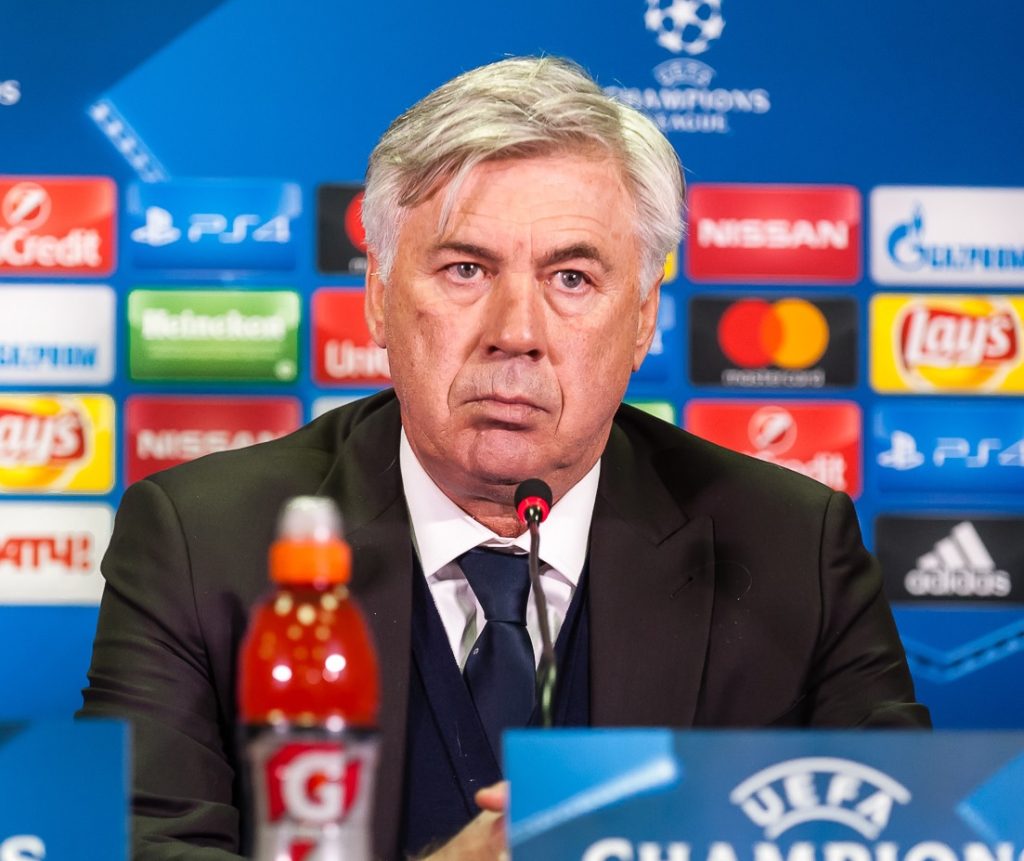
And now, on the road to the 2026 World Cup, that road carries a different accent. Italian calm. Brazilian passion. Huge expectation. For Brazil, an image like this is not just about Ancelotti’s past success. It is also about hope, and the quiet question every fan is asking: could he be the man lifting another major trophy at the end of this journey?
If you want to understand Brazil beyond the headlines, football is one of the best ways in. And if you want to experience that connection between language, culture, and emotion even more deeply, come explore Brazil with us at Rio & Learn.
Click on the links below and see more related Dicas
Zagallo
Football in Portuguese
Brazilian Football History
Rio de Janeiro Football Teams

Antônio Kath is our “Cariucho” — a Gaúcho teacher based in Rio de Janeiro who brings warmth, humor, and real teaching craft to Portuguese classes. He holds a degree in Portuguese/English from UERJ and has 6 years of experience teaching Brazilian Portuguese in-person and online in both private and public institutions. His classes focus on real-life communication, clear explanations, and practical feedback—so students can speak naturally and confidently. With a background in martial arts, literature, and online culture (especially slang), he is always looking for ways to bring joy to the classroom and make any learning experience a memorable one. When he’s not teaching, you’ll find him practicing Brazilian Jiu-Jitsu, training Muay Thai, cheering for Vasco, or playing games with his friends.
PakarPBN
A Private Blog Network (PBN) is a collection of websites that are controlled by a single individual or organization and used primarily to build backlinks to a “money site” in order to influence its ranking in search engines such as Google. The core idea behind a PBN is based on the importance of backlinks in Google’s ranking algorithm. Since Google views backlinks as signals of authority and trust, some website owners attempt to artificially create these signals through a controlled network of sites.
In a typical PBN setup, the owner acquires expired or aged domains that already have existing authority, backlinks, and history. These domains are rebuilt with new content and hosted separately, often using different IP addresses, hosting providers, themes, and ownership details to make them appear unrelated. Within the content published on these sites, links are strategically placed that point to the main website the owner wants to rank higher. By doing this, the owner attempts to pass link equity (also known as “link juice”) from the PBN sites to the target website.
The purpose of a PBN is to give the impression that the target website is naturally earning links from multiple independent sources. If done effectively, this can temporarily improve keyword rankings, increase organic visibility, and drive more traffic from search results.
