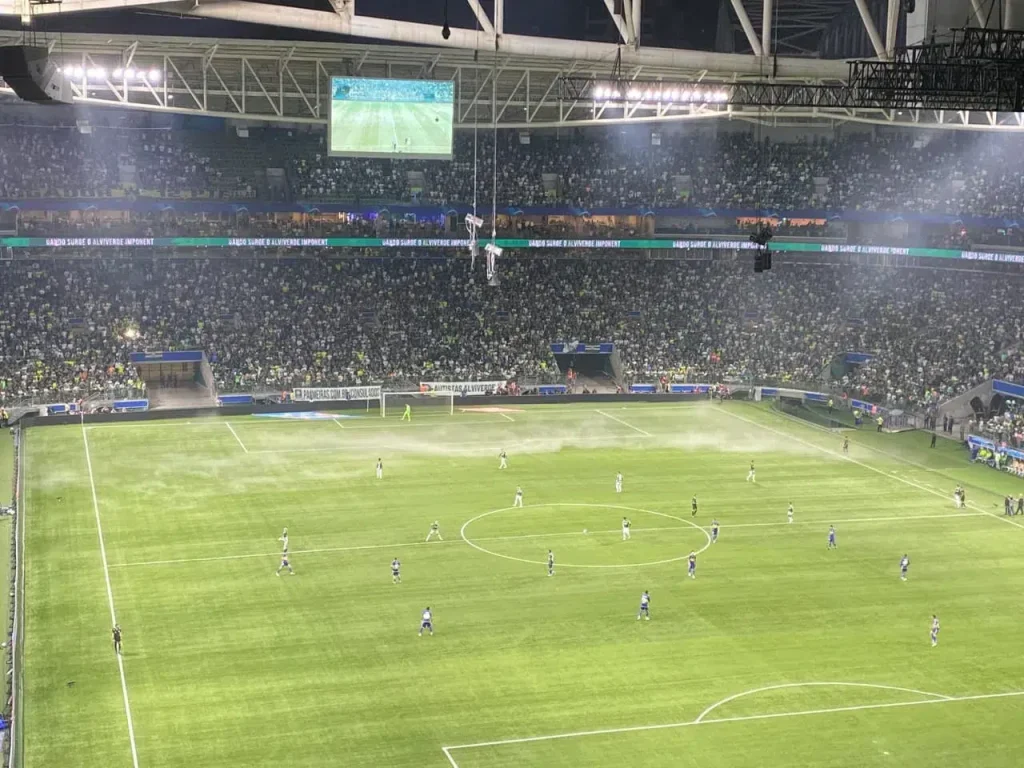

Hey everybody, do you know why Palmeiras is one of the biggest names in Brazilian football? Palmeiras has a history shaped by immigration, São Paulo’s growth, fierce rivalries, legendary players, and some of the biggest titles in Brazilian football.
In this Dica do Dia, let’s explore more about Sociedade Esportiva Palmeiras, from its origins as Palestra Italia to its place today as one of Brazil’s true football giants.
Contents
How Palmeiras Was Born: From Palestra Italia to Sociedade Esportiva Palmeiras

The history of Sociedade Esportiva Palmeiras begins in 1914, when Italian immigrants in São Paulo founded the club under the name Palestra Italia. At the time, São Paulo was rapidly growing, fueled by waves of immigration — especially from Italy. The initiative came largely from residents of Brás, then one of São Paulo’s most Italian neighborhoods, many of them linked to the Matarazzo Industries and inspired by the 1914 tour of Torino and Pro Vercelli in Brazil. One of the most involved was the young journalist Vincenzo Ragognetti, who published an invitation in Fanfulla (a newspaper aimed at the Italian community in the city of São Paulo) to those interested in founding a sports association that would have the representation that the immense community deserved.
The founders wanted a club that could represent São Paulo’s large Italian community and compete seriously with the city’s established teams. However, history forced a dramatic transformation.
It was March 1942, during World War II, when the Getúlio Vargas government instituted a decree prohibiting any entity from using names related to the Axis countries (Germany, Italy, and Japan), since Brazil had entered the conflict and joined the Allies. Palestra Italia, therefore, was forced to change its name, becoming Palestra de São Paulo on March 13, 1942 (the official approval of the new name occurred on the 27th of that month).
The change from “Italia” to “São Paulo” was not enough to quell the persecution from some rivals and even some media outlets, who questioned the club’s origins even though they knew the word “Palestra” was of Greek origin. Under threat of losing its assets and being removed from the championship it was leading, Palestra did not give up and, on September 14, 1942, changed its name to Sociedade Esportiva Palmeiras, a tribute to the defunct Associação Atlética das Palmeiras and a way to maintain the traditional P in the shirt’s crest and the even more traditional green color as the predominant one in the uniform.
A week later, on September 20, 1942, Palmeiras made its debut under its new name, precisely against São Paulo, the club that most pressured the authorities for the dismantling of Palestra Italia. The match was valid for the penultimate round of the Campeonato Paulista and could guarantee the title in advance for Verdão, which led the competition without having suffered a single defeat.

In a gesture that would be immortalized in the first verse of the Palmeiras anthem, Palmeiras players entered the field carrying the Brazilian flag, under the command of Army Captain Adalberto Mendes, intimidating possible xenophobic attacks. Marking the Brazilian national vein of the club. Up to now, the event is known as A Arrancada Heroica (The heroic sprint).
The Symbols of Palmeiras: Colors, Crest and Mascots
The Green Shirt and Kit History

The origins of the club’s colors are linked to its foundation as a club created by Italian immigrants in São Paulo. Across different eras, styles, and manufacturers, the club has preserved a visual identity that feels stable and rooted. It’s common to see people wearing the green shirt not only on matchdays, but in everyday life—on the streets, in bars, on public transport. The shirt becomes part of the city’s visual culture.
The Palmeiras Logo and Visual Symbols

The name Palmeiras comes from palm trees, a strong and very Brazilian image. It naturally brings ideas of roots, strength, and lasting presence, which fits the club really well. Over time, the name became much more than just a word. It turned into a symbol that fans instantly connect with the club’s history and spirit. The club’s green and white colors gave rise to nicknames like Verdão and Alviverde.
The Palmeiras logo is one of the most distinctive and symbolically rich crests in Brazilian football.
The current crest features:
- a circular design, traditional in many Brazilian clubs
- a strong, central “P”, representing Palmeiras
- a surrounding structure filled with lines and stars that reflect the club’s identity and history
That central “P” is especially significant. In earlier versions of the badge, the club used the letters “P” and “I”, referencing its original name, Palestra Italia. After the forced name change in 1942, the logo evolved, and the single “P” became a powerful symbol of the club’s new identity, modern, Brazilian, and independent, yet still connected to its roots.
Beyond its overall shape, the current Palmeiras crest contains subtle but meaningful details that many fans cherish. The design includes:
- 26 horizontal lines, which symbolize the 26th day
- 8 stars inside the crest, representing the month of August
Together, these elements reference the club’s founding date: August 26, 1914. It’s a quiet but elegant way of embedding history directly into the visual identity.
Palmeiras Mascots and Symbols: From the Periquito to the Porco
Palmeiras’ mascots also reflect different moments in the club’s history. The club’s first official mascot was the Periquito, adopted in 1917. The choice was not random. At the time, Palmeiras had already embraced its green identity, and the periquito, small, vibrant, and unmistakably green, became a natural symbol of the team. The bird was also associated with the area around the club’s original stadium, Parque Antarctica, where such birds were commonly seen.

However, Palmeiras’ identity took on a deeper and more complex meaning through a very different symbol: the Porco.

Originally, “Porco” was used by rival fans, especially Corinthians supporters, as an insult. In Brazilian football, nicknames given by rivals can often carry negative or mocking connotations. But Palmeiras fans did something remarkable: instead of rejecting the term, they embraced it.
Over time, the Porco was transformed from an insult into a badge of pride.
What was once an insult has become chants like “Dale Porco” and the simple cry of “Porco!” to support Palmeiras in matches.
Allianz Parque: Where Palmeiras Plays in São Paulo

Palmeiras plays at Allianz Parque, one of the most modern stadiums in South America. It is where Palmeiras’ history meets the energy of modern football.
The stadium is in Barra Funda, a busy neighborhood in São Paulo that feels even more alive on matchdays. Little by little, the area starts to change. The bars fill up, the sidewalks turn green and white, and the whole region begins to move with the rhythm of the game.
What makes the stadium even more special is its history. Allianz Parque stands on the same ground where Palmeiras’ old home once stood: Palestra Italia, later known as Parque Antarctica.
Today, Allianz Parque is not only the home of Palmeiras. It is also one of São Paulo’s biggest spaces for concerts, huge events, and major live shows.
For visitors, this makes it a great place to explore. You can watch a match and feel the power of Brazilian football up close, take a stadium tour, see behind the scenes, and learn more about the club’s history through its trophies and exhibitions.
It has the comfort and structure of a modern arena, but it still keeps the emotion, memory, and atmosphere that make Brazilian football feel so special.
Allianz Parque’s New Naming Rights Chapter
Palmeiras’ stadium is entering a new chapter off the pitch as well. In April 2026, Nubank announced a long-term naming-rights deal with WTorre, the arena’s operator, while the new official name began to be decided through a public vote. Even so, the stadium is still widely referred to as Allianz Parque for now, including on Palmeiras’ own match information and the arena’s official website. That transition itself says a lot about the size and visibility of Palmeiras’ home, which remains one of the most important football and event venues in Brazil.
Palmeiras is often referred to as the “Maior Campeão do Brasil” (the Biggest Champion of Brazil).
At the national level, Palmeiras stands out as:
- the biggest champion of the Brazilian league (12 titles)
- a multiple-time Copa do Brasil winner (4 titles)
- the second most successful club in the São Paulo state championship (27 titles)
Palmeiras has been competitive across decades, adapting to different generations of football while maintaining relevance.

On the continental stage, the club has also left a strong mark. Palmeiras is one of the most successful Brazilian teams in the Copa Libertadores, with 3 titles, placing it among the elite clubs in South America.
However, when discussing Palmeiras’ global status, one topic always emerges: the 1951 Intercontinental title.
In that year, Palmeiras won a tournament recognized at the time as a world-level competition, facing international opponents. Many Palmeiras supporters consider this victory a legitimate early version of the Club World Cup, and FIFA has, at different moments, acknowledged its importance.
But football in Brazil is also shaped by rivalry and humor.
Rival fans often challenge this title, using the phrase:
“51 é pinga”
(a reference to a popular Brazilian cachaça brand called “51”)
Whether seen as a world title or not, the 1951 achievement remains a central part of Palmeiras’ identity and narrative. Those titles were won across different eras, and each era had its own defining figures.
Palmeiras Legends Who Shaped the Club
Historic Icons

Ademir da Guia – elegance and intelligence
Known as “O Divino”, Ademir da Guia represents perhaps the purest form of Palmeiras football. His style was calm, intelligent, and technically refined. He didn’t rely on speed or physical dominance, but on reading the game better than anyone else. For many fans, he symbolizes a more classic, thoughtful version of football, one that values control, vision, and intelligence.
Marcos – loyalty and heroism
Marcos is one of the most beloved figures in Palmeiras history. His great saves earned him saintly status among Palmeiras fans. Not only the fans, but almost anyone who mentions him calls him “Saint Marcos.” A goalkeeper who stayed loyal to the club even during difficult periods, he became a symbol of commitment. His performances, especially in crucial matches, turned him into a hero. Marcos represents something rare in modern football: a deep emotional bond between player and club.


Evair – the decisive striker
Evair is remembered for his ability to deliver in the most important moments. A striker with precision and composure, he scored goals that defined matches and titles. His legacy is tied to efficiency and reliability, the kind of player supporters trust when everything is on the line.
Djalma Santos – world-class defender
Djalma Santos brought international prestige to Palmeiras. As one of the greatest right-backs in football history, he combined defensive solidity with technical quality. His presence connects Palmeiras to a broader, global football narrative, showing that the club has always been capable of producing and attracting world-class talent.


César Maluco – iconic goal scorer
César Maluco is remembered for his instinct in front of goal and his strong personality. He was not just a scorer he was a symbol of competitiveness and intensity. His name remains tied to one of the most successful periods in the club’s early history.
Modern Era Figures

Abel Ferreira – the transformative coach
Abel Ferreira has been one of the most important figures in Palmeiras’ modern history. More than just a coach, he reshaped the team’s mentality. Under his leadership, Palmeiras became tactically disciplined, mentally strong, and capable of competing at the highest level. He represents a new era of professionalism and ambition.
Dudu – the emotional leader
Dudu is one of the most recognizable faces of modern Palmeiras. His connection with the fans is immediate and emotional. On the field, he combines creativity, intensity, and leadership. Off the field, he represents continuity and identity in a constantly changing football environment. As Palmeiras’ first major signing in this new winning phase, he is more than just a player; he is also a symbol of this new era. He is one of the players tied for second place in terms of titles won with Palmeiras, with 12 titles.


Raphael Veiga – technical quality
Raphael Veiga embodies modern Brazilian football intelligence. A technically gifted midfielder, he is known for his ability to control the tempo of the game, create chances, and deliver in decisive moments especially from set pieces. He represents efficiency and tactical awareness. He is another one of the players tied for second place in terms of titles won with Palmeiras, with 12 titles.
Gustavo Gómez – defensive strength
As captain, Gustavo Gómez brings stability and leadership. His presence in defense reflects discipline, organization, and resilience qualities that define Palmeiras’ recent success. He is the backbone of the team. Gómez is by far the player with the most titles for Palmeiras, demonstrating not only the Paraguayan’s quality, but also his dedication and loyalty during his time at the club.


Endrick / Estêvão – the future
The emergence of players like Endrick and Estêvão shows that Palmeiras is also a club of the future. They represent youth, potential, and global attention. Their development reflects the club’s ability to produce talent while remaining competitive at the highest level. The rise of “academy graduates” (as players from Palmeiras’ youth system are called) is helping Palmeiras grow internationally as a benchmark for youth development and its strength in producing quality players.
Palmeiras Rivalries: Why Derby Matches Matter So Much
Like many of Brazil’s biggest clubs, Palmeiras is also defined by its rivalries, especially within São Paulo.
Palmeiras vs Corinthians

The Derby Paulista is one of the biggest rivalries in Brazil. It’s the most traditional and fiercely contested derby between two football clubs in the city of São Paulo. The teams have already faced each other in 7 state championship finals and 1 national final, in addition to several important clashes in other competitions. One of these clashes was the iconic 1999 quarter-final, the most memorable duel of Palmeiras’ first Libertadores victory.
Other Rivalries
Palmeiras also has major clashes with:
Flamengo:
A current rivalry, marked by the dominance both clubs have had at the national level in recent years, with many important titles ending with one as champion and the other as runner-up.
São Paulo:
Some fans say that “Corinthians is a rival, but São Paulo is an enemy.” From the beginning, the clubs seemed to dislike each other, with São Paulo being a strong opponent of Palmeiras, and the major club in favor of changing the name of Palestra Italia.
Santos:
Many say that Palmeiras was the only team that could rival Pelé’s Santos, and that’s why a great rivalry developed between the clubs. Although the rivalry is not as strong today as it once was, they even reached the final of the Copa Libertadores in 2020.
Palmeiras at the Club World Cup: Porto, Al Ahly, Inter Miami, Botafogo, and Chelsea
At the Club World Cup, Palmeiras faced Porto, Al Ahly, and Inter Miami in a group that brought together very different kinds of opposition, from European tradition to African strength and global media attention. The tournament then took on an even sharper edge in the knockout stage, where Verdão first met Botafogo in an all-Brazilian clash full of extra tension before facing Chelsea on the world stage once again.
Palmeiras’ campaign ended in the quarter-finals with a defeat to Chelsea, but that exit still came against the team that went on to win the competition. Palmeiras did not fall early against an ordinary opponent, but against the eventual champions. Altogether, the tournament added another important international chapter to Palmeiras’ recent history and showed how naturally the club now belongs in these global conversations.

Whether you love football already or are just starting to explore Brazilian culture, Palmeiras is one of the best clubs to know. Its story mixes immigration, resilience, big titles, fierce rivalries, and unforgettable matchdays in São Paulo. And after all this, one thing is clear: once Palmeiras enters the conversation, it definitely does not leave quietly.
Click on the links below to see more related Dicas:
Flamengo
Corinthians
Santos F.C.
São Paulo

Gabriel S. Ramos is our Reddit Teacher and Multimedia specialist based in Guarulhos, São Paulo. With a background in Radio, TV & Internet, Gabriel brings a unique multimedia edge to Portuguese instruction. He leverages his experience in scriptwriting, video editing, and content creation to offer dynamic classes that go far beyond grammar. He specializes in teaching real Portuguese through the lens of modern content, memes, and digital trends. A massive Palmeiras fan and a geek for all things online, Gabriel makes sure your learning journey is as engaging as your favorite YouTube feed.
PakarPBN
A Private Blog Network (PBN) is a collection of websites that are controlled by a single individual or organization and used primarily to build backlinks to a “money site” in order to influence its ranking in search engines such as Google. The core idea behind a PBN is based on the importance of backlinks in Google’s ranking algorithm. Since Google views backlinks as signals of authority and trust, some website owners attempt to artificially create these signals through a controlled network of sites.
In a typical PBN setup, the owner acquires expired or aged domains that already have existing authority, backlinks, and history. These domains are rebuilt with new content and hosted separately, often using different IP addresses, hosting providers, themes, and ownership details to make them appear unrelated. Within the content published on these sites, links are strategically placed that point to the main website the owner wants to rank higher. By doing this, the owner attempts to pass link equity (also known as “link juice”) from the PBN sites to the target website.
The purpose of a PBN is to give the impression that the target website is naturally earning links from multiple independent sources. If done effectively, this can temporarily improve keyword rankings, increase organic visibility, and drive more traffic from search results.
