
In Brazil, the World Cup sticker album is part of the tournament culture. Before the first match, people are already opening packets, trading duplicate stickers, and trying to complete the official Panini album.
In Portuguese, football stickers are called figurinhas. During a World Cup year, figurinhas da Copa become a shared activity in schools, shopping malls, bookshops, newsstands, offices, and family homes across Brazil.
This Brazil football sticker tradition is not just for children. It brings together collectors of all ages, from kids opening their first album to adults who still remember swapping stickers in past World Cups.
The Panini Album: A Brazilian World Cup Tradition
The Panini World Cup album has been part of football culture in Brazil for generations. Many Brazilians grew up collecting stickers, swapping duplicates at school, and trying to find the last missing players before the tournament began.
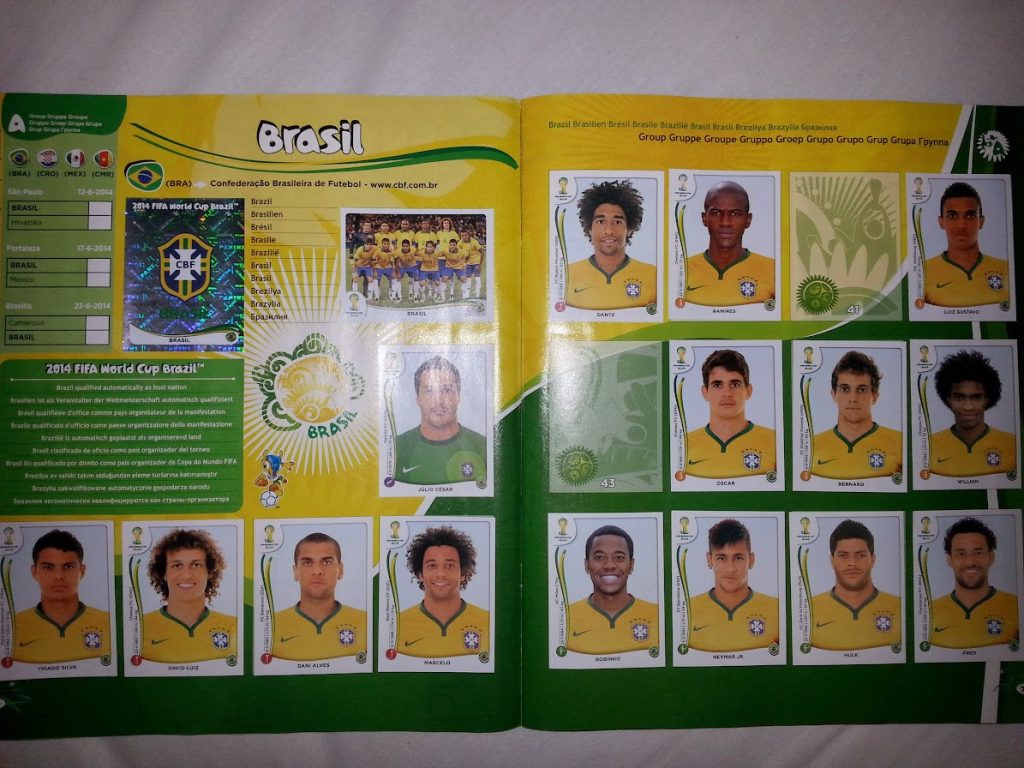
The 2014 album is especially memorable in Brazil because the World Cup was hosted here. For many collectors, the Brazil 2014 Panini album is not just an old collection, but a reminder of the last time the tournament took over Brazilian stadiums, streets, bars, beaches, and living rooms.
For the 2026 World Cup, the official Panini album is bigger because the tournament has expanded to 48 national teams. The album has 980 stickers, including special stickers, and regular packets in Brazil cost R$7 and include seven stickers.
That makes the 2026 album exciting, but also expensive. Completing it depends on more than buying packets: collectors need to swap duplicates too.

How Much Do World Cup Stickers Cost in Brazil?
The price of World Cup sticker packets is always a talking point in Brazil. For the 2026 album, a regular packet costs R$7. Because the album has 980 stickers, completing it can cost a lot more than the minimum number suggests.
The price of a pacotinho has become its own little World Cup inflation index. Every four years, collectors compare the new price with the previous one, complain for a moment, do the maths, and then buy the stickers anyway.
If someone bought exactly the right number of stickers with no duplicates, the total would already be high. In reality, duplicates are unavoidable, so collectors usually need to trade or buy many extra packets. Some Brazilian collectors estimate that completing the album can reach around R$3,000 if you depend mostly on buying packets.
This is why trading is essential. Without swapping duplicates, the album becomes much harder and more expensive to complete.
Brazilians often joke that the cost is easier to accept because the World Cup only happens every four years. Spend R$3,000? Divide it by four and suddenly it becomes an annual football investment. It is not perfect financial logic, but it is very common World Cup logic.
Where Brazilians Trade Figurinhas
Trading is one of the most important parts of collecting figurinhas da Copa. People usually separate their duplicate stickers into piles and meet other collectors to exchange them.
In Brazil, sticker trading can happen almost anywhere: at school, at work, at home, in shopping malls, at newsstands, and in bookshops. Stores such as Livraria Leitura also organize sticker-swapping events, where collectors meet to exchange duplicates and find missing ones.
Newspaper stands are also part of the sticker season in Brazil. During the World Cup, people do not just stop there to buy sticker packets. They often open them, compare duplicates, and talk about football, turning a simple purchase into part of the World Cup experience.
These events are popular because they make the album cheaper and more social. They also bring together collectors from 4 to 84: children, parents, grandparents, students, and long-time fans all searching for the same missing stickers.
At our school, students and teachers are already trading stickers together. It is a simple way to practice Portuguese, talk about football, and join a very Brazilian World Cup habit.

Fake World Cup Stickers: How Collectors Avoid Scams
With so many people buying and trading World Cup stickers, fake figurinhas can also appear. In 2026, this became a bigger talking point after Rio de Janeiro police seized around 200,000 fake World Cup album stickers in Nova Iguaçu, in the Baixada Fluminense. Reports warned collectors to pay attention to suspiciously cheap packets, poor print quality, strange colors, flimsy paper, unusual shine, and bad cutting around the sticker edges.
For collectors, the safest option is to buy packets from official sellers, trusted shops, newsstands, or well-known stores. During trades, it is also worth checking whether the sticker looks and feels like the official ones you already have. In Brazil, even collecting figurinhas has its own street-smart rule: if the deal looks too good to be true, check the sticker twice.
Bater Bafo: The Sticker Game Brazilians Play
Not every duplicate sticker is used for trading. Some become part of a classic Brazilian game called bafo, also known as bater bafo or bater figurinha. In this game, players place stickers in a small pile, usually on the floor or on a flat surface. Each player slaps the pile with an open hand, trying to create enough air movement to flip the stickers over. The stickers that turn over belong to the player who flipped them.
The name bafo comes from the idea of air or breath, because the movement of the hand creates a little burst of air that helps turn the stickers. It looks simple, but Brazilians know there is technique involved. It is not only about strength. It is about timing, hand position, and knowing exactly how to hit the pile. This is one of the reasons duplicate figurinhas are not always useless: they can become currency for trades, or ammunition for a game of bafo.
Coca-Cola and McDonald’s World Cup Stickers
The 2026 Panini collection in Brazil also includes special partnerships with major brands, including Coca-Cola and McDonald’s.
Coca-Cola created a campaign connected to the Panini World Cup album. In Brazil, some special stickers are available through participating 600 ml bottles of Coca-Cola Original and Coca-Cola Zero Sugar. These stickers are linked to an exclusive page in the official album.

McDonald’s also has promotional sticker packets in partnership with Panini. These packets are cheaper than regular packets, but they include fewer stickers. The McDonald’s packets cost R$5 and come with five stickers.
These promotions make the collection more varied. Collectors may need to look beyond regular newsstands if they want special stickers, promotional packets, or digital album features.
The Online and Virtual Panini Album
The Panini World Cup sticker tradition is no longer only a physical experience. Many collectors still love the paper album, but apps, QR codes, digital packs, and online albums have become part of the experience too.
This digital side is not new. Panini has used online and virtual World Cup albums before, including during the Brazil 2014 World Cup. For collectors, that means the tradition now lives in two places at once: the physical album on the table and the virtual album on the phone.
The paper album still has the strongest emotional pull. Opening a real pacotinho, checking for duplicates, and placing a player in the album is part of the ritual. The online version adds convenience, especially for people who want to unlock digital content, follow the collection on their phone, or connect the physical album with extra digital features.
The Neymar Sticker Drama
One of the most talked-about details of the 2026 album in Brazil was Neymar. He was not included in the initial Panini album, even though he later made Brazil’s final World Cup selection.
Panini announced an update pack after Carlo Ancelotti’s official squad announcement because some selected players were missing from the first version of the album. For Brazilian fans, Neymar’s absence from the original album became a natural football debate.
It is the perfect kind of Brazilian football drama: even the sticker album has a squad debate. In Brazil, the album follows the arguments, surprises, and emotions around the national team.
Portuguese Practice: World Cup Sticker Vocabulary
If you are in Brazil during World Cup sticker season, these words and phrases are useful:
| Portuguese | English |
|---|---|
| Figurinha | sticker |
| Figurinhas da Copa | World Cup stickers |
| Álbum de figurinhas | sticker album |
| Pacotinho | small sticker packet |
| Figurinha repetida | duplicate sticker |
| Trocar figurinhas | to trade stickers |
| Figurinha brilhante | Shiny sticker |
You may hear these sentences:
“Você tem essa figurinha?”
Do you have this sticker?
“Essa é repetida.”
This one is a duplicate.
“Vamos trocar?”
Shall we trade?
“Falta só uma!”
Only one is missing!
“Quanto custa o pacote?”
How much does the packet cost?
“Estou tentando completar o álbum.”
I am trying to complete the album.
Why World Cup Stickers Are So Popular in Brazil
World Cup stickers are popular in Brazil because they combine football, collecting, memory, and social life. They give people a reason to talk about teams, players, prices, missing stickers, duplicate stickers, and old tournaments.
For Portuguese learners, this tradition is also useful. You practice numbers, questions, football vocabulary, negotiation, and everyday conversation in a natural way.
So, when you visit Brazil during a World Cup season, do not just watch the matches. Open a pacotinho, learn the word figurinha, and try trading stickers with someone. It is one of the easiest ways to feel how football becomes part of daily life in Brazil.
Click on the links below to see more related Dicas:
Brazilian Football History
Why is Football so Important in Brazil
Neymar

SEO Content Specialist at Rio & Learn Portuguese School. A native English speaker who arrived in Brazil six months ago and quickly fell in love with the country, Tom focuses exclusively on Brazil-focused content. He combines data-driven keyword research with careful fact-checking in collaboration with Rio & Learn’s Brazilian teachers.
PakarPBN
A Private Blog Network (PBN) is a collection of websites that are controlled by a single individual or organization and used primarily to build backlinks to a “money site” in order to influence its ranking in search engines such as Google. The core idea behind a PBN is based on the importance of backlinks in Google’s ranking algorithm. Since Google views backlinks as signals of authority and trust, some website owners attempt to artificially create these signals through a controlled network of sites.
In a typical PBN setup, the owner acquires expired or aged domains that already have existing authority, backlinks, and history. These domains are rebuilt with new content and hosted separately, often using different IP addresses, hosting providers, themes, and ownership details to make them appear unrelated. Within the content published on these sites, links are strategically placed that point to the main website the owner wants to rank higher. By doing this, the owner attempts to pass link equity (also known as “link juice”) from the PBN sites to the target website.
The purpose of a PBN is to give the impression that the target website is naturally earning links from multiple independent sources. If done effectively, this can temporarily improve keyword rankings, increase organic visibility, and drive more traffic from search results.