
Hi there, Portuguese students! Today, we will talk about a very interesting topic about Brazilian culture: art! Join us on a journey through the history of Brazilian art, its evolution over time, and its impact on the world. Ready? Grab your brush and paint, let’s go!
If you’re more interested in museums in Rio de Janeiro, check out this Dica.
New Podcast Episode!
🎧 We have a new podcast episode about this Dica! Listen here:
Our experts explore the captivating world of art in Brazil, covering its various periods, styles, and influences. From indigenous art to modern Brazilian art projects, discover how Brazil’s artistic expressions reflect its rich history and cultural diversity. Tune in now and immerse yourself in the beauty of Brazilian creativity! 🎨
Want to challenge yourself? Be bold and listen to the entire podcast in Portuguese here.
Did you know you can switch this post’s language to Portuguese, too? That way, you’ll have plenty of resources to deepen your artistic understanding in Portuguese. ✨
Timeline of Brazilian Art
Let’s explore the different artistic movements in Brazil. Although each style emerged during the period listed below, many continue to influence artists today!

Pre-Historical

Brazilian prehistoric art is found in hundreds of archaeological sites, primarily in the Northeast. These ancient paintings, created with mineral and vegetable pigments, and even animal blood, decorate rock shelters and caves. The oldest discovered paintings, estimated to be 15,000 years old, were found in Piauí. Early artists also used bones, clay, stones, and horns to create functional and ceremonial objects.
Indigenous Art

When Brazil was discovered by the Portuguese, it was home to about five million indigenous people. Although many indigenous artistic traditions were lost over time, they still thrive today, especially in the Amazon region. Indigenous art includes decorative ceramics, body painting, feather art, weaving, masks, and headdresses. These body paintings serve not only as decoration but also as protection against the sun, insects, and, according to indigenous beliefs, evil spirits.
Colonial Art

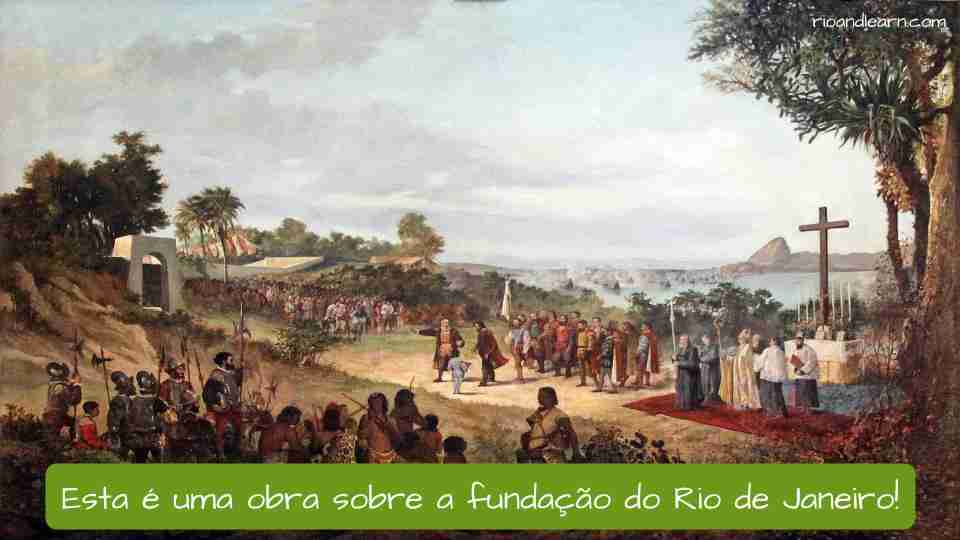
After Pedro Álvares Cabral’s arrival, Brazil became a Portuguese colony, absorbing influences from various cultures, including the Dutch, who left a significant artistic legacy in Pernambuco. The African peoples, forcibly brought to Brazil as slaves, also played a crucial role in shaping the country’s art and popular culture.
During this period, colonial art was heavily influenced by European styles, particularly Renaissance and Mannerism, but adapted to the local setting. Religious art flourished, with churches being decorated with intricate wood carvings, gilded altars, and sacred paintings.
Barroque

Baroque art flourished in Brazil from the late 17th to early 19th centuries, blending Portuguese and Italian influences with local craftsmanship. This style is known for its grandeur, dramatic contrasts, and elaborate religious sculptures.
A key center of Brazilian Baroque is Ouro Preto, Minas Gerais, home to masterpieces like the Church of São Francisco de Assis, featuring gold-covered interiors and intricate carvings. The most renowned Brazilian Baroque artist, Antônio Francisco Lisboa, or Aleijadinho, overcame a debilitating illness to create some of the most expressive sculptures of the era. His Twelve Prophets at the Sanctuary of Bom Jesus de Matosinhos exemplify Baroque’s intense emotion and dynamic movement.
If you want to get to know Ouro Preto, consider coming for an immersion with us! You will have one of our native teachers to make you company and teach you all about Barroque while learning Portuguese!
Neoclassicism

In 1816, the French Artistic Mission came to Brazil. The mission brought Jean-Baptiste Debret, Nicolas-Antoine Taunay, Félix-Émile Taunay, Auguste Taunay and Auguste-Henri-Victor Grandjean de Montigny. These artists sought to portray the colony’s daily life in a romantic way by idealizing the figure of the indigenous person and emphasizing nationalism and natural landscapes. The arrival of the French Artistic Mission in Brazil gave rise to neoclassicism – a movement that advocates a return to classical ideals.
From Romanticism to Symbolism

From 1850 to 1922, artistic influence closely matched the trends of Europe. Brazil saw four major artistic movements in the period:
- Romanticism focused on national identity, indigenous culture, folklore, and the beauty of nature.
- Realism opposed Romanticism, favoring objectivity, social critique, and psychological depth. Machado de Assis was its most famous writer.
- Naturalism closely followed Realism, often depicting the lives of the lower classes. Key figures included Antero de Quental and Eça de Queiroz.
- Symbolism took a different approach, emphasizing mysticism, musicality, and abstraction, aiming to explore ideas beyond the material world.
Modernism

Brazilian modern art began with the Modern Art Week of 1922, a groundbreaking event that challenged traditional artistic norms and embraced bold, innovative styles. The movement sought to capture Brazil’s unique identity by blending European avant-garde influences with indigenous and Afro-Brazilian cultural elements. Modernist artists experimented with abstraction, bright colors, and unconventional forms to break away from classical traditions.
The most renowned Brazilian modernist artist was Tarsila do Amaral, whose painting Abaporu became a symbol of the movement. Other notable figures include Anita Malfatti and Oswald de Andrade, both of whom played key roles in shaping modern Brazilian art and literature.
Contemporary Art

In 1951, São Paulo launched the Book & Art Biennial, marking the beginning of contemporary art in Brazil. Contemporary artists prioritize concept over form, using their work to provoke thought and discussion. A leading figure of this period was Hélio Oiticica, a key contributor to the Tropicália movement.
Want to see contemporary Brazilian art in person? Check out the Museum of Modern Art in Rio de Janeiro, or visit the iconic Niterói Contemporary Art Museum!
What’s Your Favorite Era?
Which period of Brazilian art interests you the most? Tell us in the comments! And why not research a Brazilian artist and share their name below?
See you soon!
Click on the links below to see more related Dicas
Museums in Rio
CCBB in Rio de Janeiro
Imperial Palace in Rio de Janeiro
Independence Day in Brazil

SEO Content Coordinator at Rio & Learn Portuguese School.
She was seven month Rio & Learn Online Courses Academic Coordinator and our A Dica do Dia blog Coordinator for two years and a half. Fluent in Portuguese, English, Spanish, and with elementary proficiency in Chinese, she is a versatile communicator and a strategic asset to global teams.
PakarPBN
A Private Blog Network (PBN) is a collection of websites that are controlled by a single individual or organization and used primarily to build backlinks to a “money site” in order to influence its ranking in search engines such as Google. The core idea behind a PBN is based on the importance of backlinks in Google’s ranking algorithm. Since Google views backlinks as signals of authority and trust, some website owners attempt to artificially create these signals through a controlled network of sites.
In a typical PBN setup, the owner acquires expired or aged domains that already have existing authority, backlinks, and history. These domains are rebuilt with new content and hosted separately, often using different IP addresses, hosting providers, themes, and ownership details to make them appear unrelated. Within the content published on these sites, links are strategically placed that point to the main website the owner wants to rank higher. By doing this, the owner attempts to pass link equity (also known as “link juice”) from the PBN sites to the target website.
The purpose of a PBN is to give the impression that the target website is naturally earning links from multiple independent sources. If done effectively, this can temporarily improve keyword rankings, increase organic visibility, and drive more traffic from search results.